Black Pioneers

Celebrating Black Pioneers of Women’s Football, part 1.
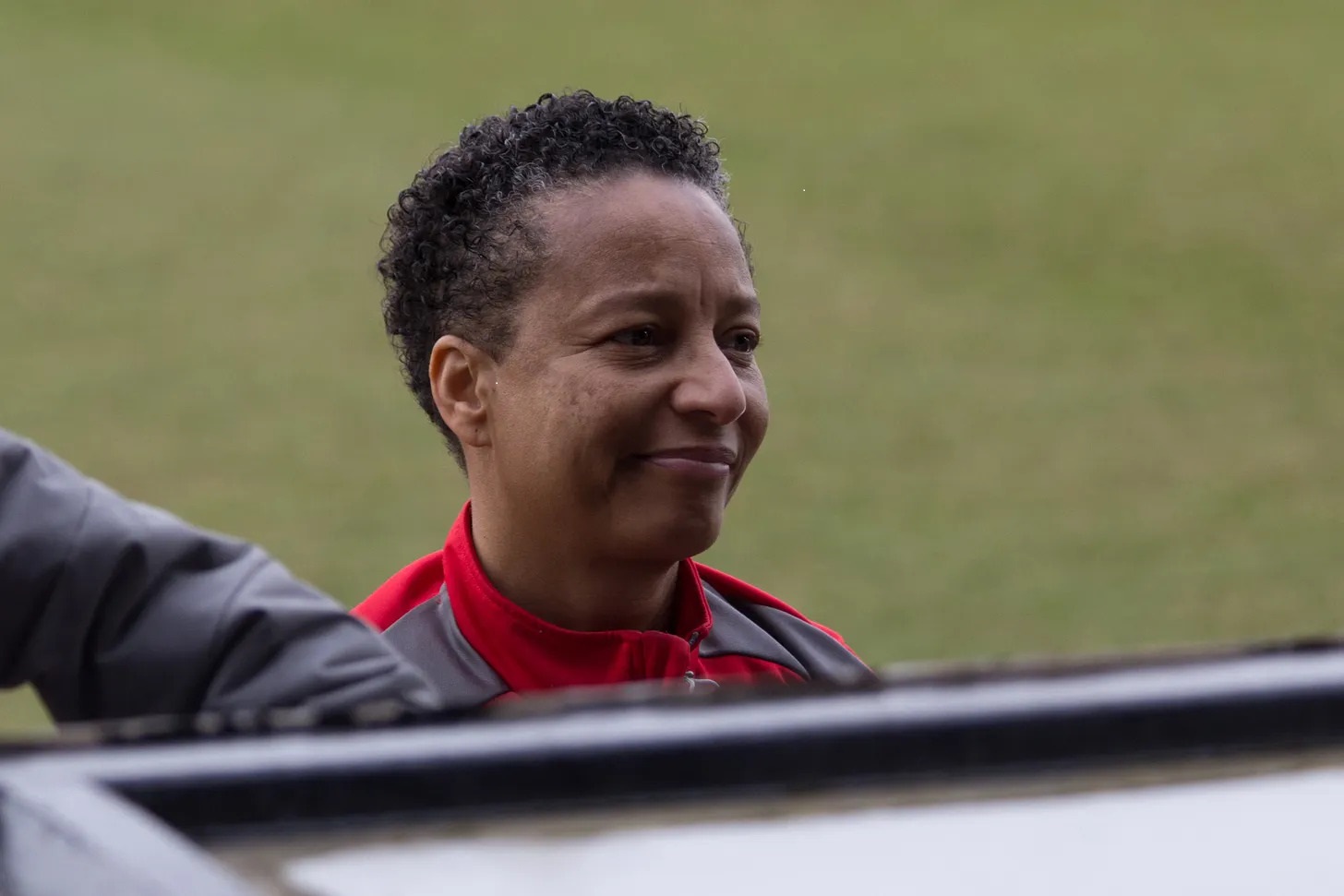
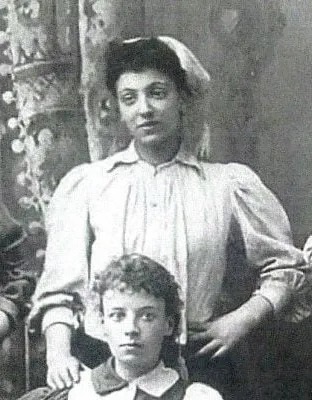
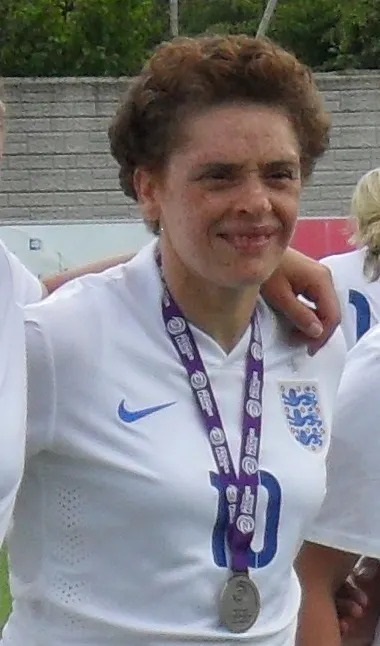
Emma Clarke, Kerry Davis, and Hope Powell.
As always, I am delighted to spotlight Clare McEwen’s work and in this case even more so as it relates to (a) black players and (b) women players. We all know that they are often the most forgotten of all those who take the pitch. She says,
“This week I’m jumping on the Black History Month train and celebrating black women in football’s history.
I apologise for being proof that Black History Month is still needed since I’ve not specifically written a series on these women before.
As with much of the deeper history of women’s football, it’s hard to be completely sure of the facts when we go back in time. There are some anomalies in what’s written about my first black player today, but she has a blue plaque in North London declaring her as a “pioneering Black British female footballer”, and that’s the qualifier for this piece.
Emma Clarke
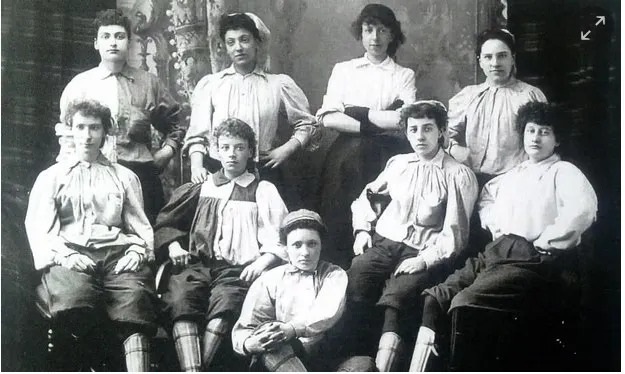
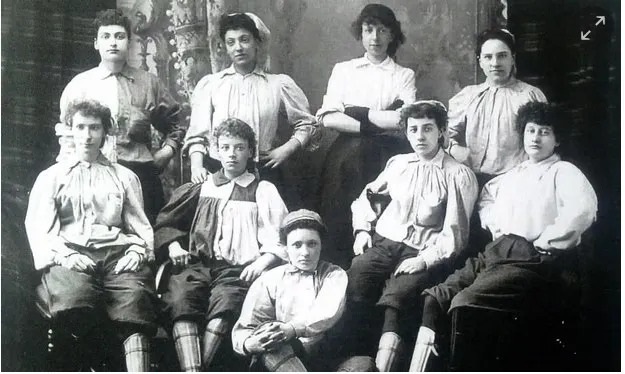
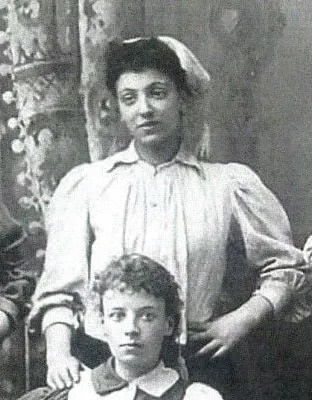
Emma Clarke played in one of the first documented games in England when in 1895 British Ladies FC played their North vs South game in Crouch End, London. Thanks to the spirit and organisational skills of Nettie Honeyball – who brought the British Ladies together – the game drew a big crowd.
Emma Clarke made her football debut in that game, in front of around 10,000 people.
As reported in Irish newspaper Northern Whig in June 1895, Emma played at right back, but other reports describe her as a ‘back’. Anyway, she was a defender and probably a versatile one. Actually, it appears she sometimes played in goal too.
Oh yeah, and on the wing according to the South Wales Daily News: “the fleet footed dark girl on the right wing”.
The importance was the playing, not the position.
Little is known about her background. It is thought the players earned a shilling a week for playing – so they were effectively professional. They also had their board and food paid for them.
In 1896, Emma made her debut for the breakaway team Mrs Graham’s XI, which toured Scotland. The matches drew big crowds and there was plenty of media interest around the team.
Emma Clarke’s football career continued until at least 1903 but little else is known.
Kerry Davis
Kerry Davis made her England debut in 1982. She was the first black woman to play for England. She became a crucial attacking force for her country for the next 16 years.
Born in 1962 in Stoke-on-Trent, England to a Jamaican father and English mother, Kerry grew up surrounded by racism. Football was her escape.
Women’s football still wasn’t visible then but she found a safe space and a chance to build a fantastic career.
The devastating England striker began her senior career at Crewe Alexandra. And it wasn’t long before the national team came knocking.
She started strongly by scoring twice on debut against Northern Ireland. The game was part of the European Championship qualification and Kerry continued to thrive in the qualification matches.
She scored four against Scotland in the next game. Across six Euro qualifiers, Kerry scored in five of them, netting 11 times in total.
The first UEFA-sanctioned Euros was played in 1984. Kerry scored in the first leg of the semi-final against Denmark to help England secure a place in the first UEFA final. She was England’s top scorer across the campaign.
It wasn’t to be for England, though, and they lost on penalties.
In 1985, Kerry was a key part of the England squad who won the Mundialito ‘little’ World Cup. She was impressive in both games against the Italians and off the back of it was signed by Italian semi-professional team Roi Lazio.
She went to Italy because she wanted a career in football. While there she played for Roi Lazio, Trani 80, and Napoli before returning to Crewe Alexandra in 1989.
She continued to represent England while in Italy, but often at her own expense.
Across the next 10 years she played for Crewe, Knowsley United (later Liverpool), Croydon, and Millwall Lionesses, and remained a key goalscorer for England.
She scored at Wembley in 1990 when England were beaten 4-1 by Italy and played all four 1995 Fifa Women’s World Cup games.
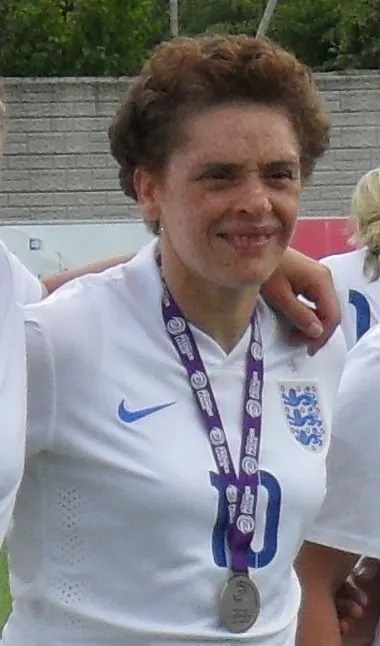
Kerry was a versatile player so also played in midfield frequently. Despite this, by the time her international career with the Lionesses had ended, Kerry had scored 43 goals in 90 games.
Her England scoring record was only surpassed in 2012 by Kelly Smith.
As well as the 1985 Mundialito with England, Kerry won two FA Women’s Premier League titles and an FA Cup with Croydon.
She was inducted into the National Football Museum’s Hall of Fame in 2022 and made an MBE in 2026.
Hope Powell
I’ve said it before and I’ll say it again: Hope Powell was instrumental in creating the setup that gives us the modern-day Lionesses.
Before that, she was an exceptional player.
Hope was born in 1966 in Lewisham, London. She made headlines in the newspapers when, aged 12, she was banned by the FA from playing for her school team. Because of the rules at the time, girls were no longer allowed to play alongside boys after age 11.
Hope joined women’s team Millwall Lionesses. Five years later, Hope was playing for the senior England team.
She made her debut in September 1983 against the Republic of Ireland in a qualifying game for the first UEFA Euros. At just 17 years old, she played in the first sanctioned European Championship final, in 1984.
During her playing career, Hope Powell won the FA Cup twice, with Millwall Lionesses and Croydon, the Women’s Premier League with Croydon, and two Mundialitos with England.
She played 66 times for England and scored 35 goals. She was Millwall Lionesses’ all-time top goalscorer.
And that isn’t even the most impressive part of her career.
In 1998, she became the first ever full-time coach of England’s women’s team. She was only 31.
She was instrumental in pushing the FA to open 20 Centres of Excellence across England. She oversaw the whole England setup from youth level through to the senior team.
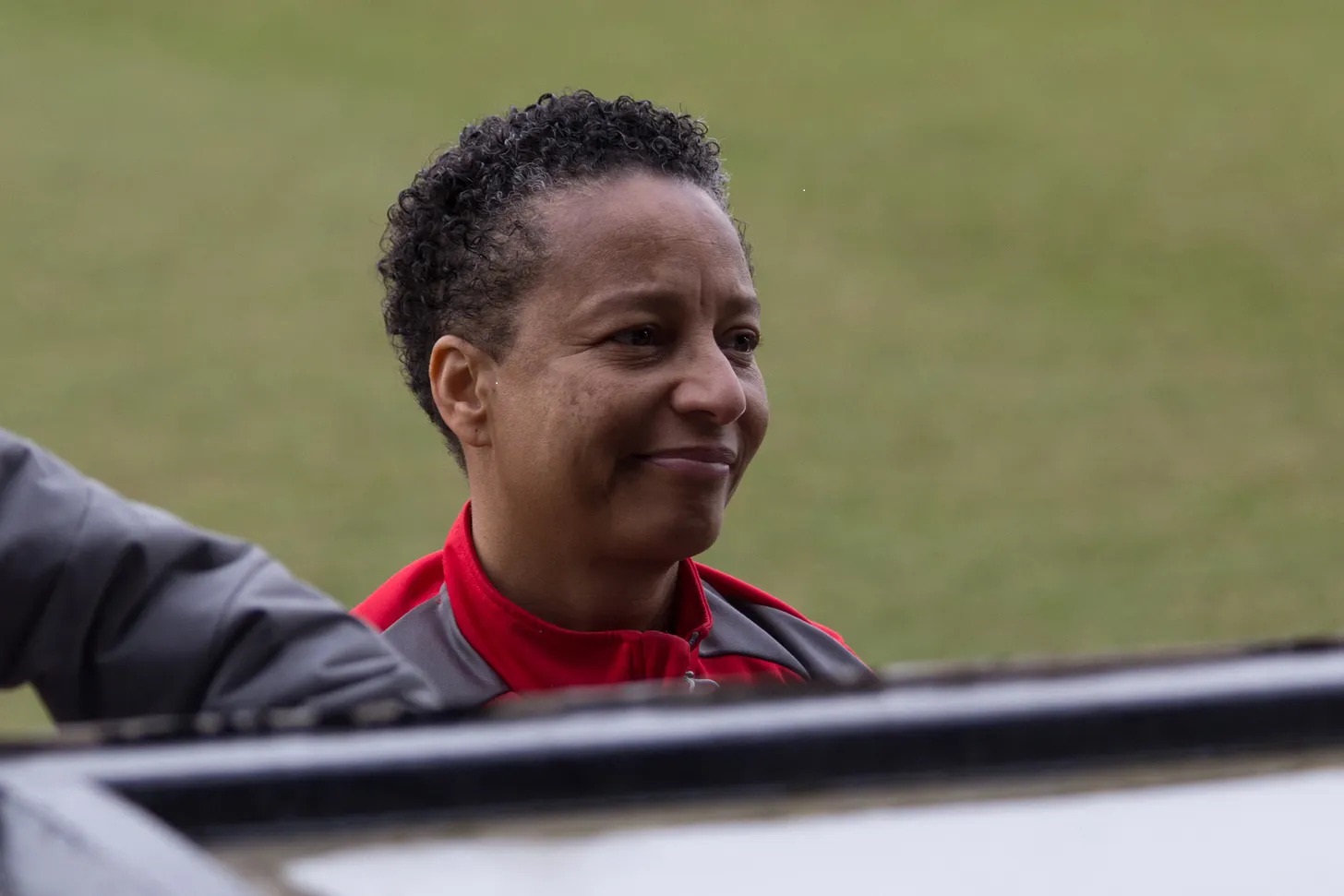
Over the next 15 years, she made changes and fought battles that ultimately led to England’s more recent successes.
Hope Powell literally built the England women’s setup from the ground up.
She brought in physios, a medical officer, a sports scientist, and a goalkeeping coach for the first time.
Together, they created a professional setup and began changing how England’s national team functioned.
Until this point, everything about the setup had been completely amateur.
In 2001, the FA increased the number of Centres of Excellence to 50. The Centres provided a pathway from grassroots football in towns and villages to potentially playing the sport at the top level.
Alongside the Centres of Excellence, Hope Powell began the first scholarship programme. This allowed nineteen players to receive fully funded scholarships to attend the Loughborough Player Development Centre – meaning they could continue their education alongside top football coaching.
Since most clubs were still part-time, the scholarships allowed players such as Ellen White, Jill Scott, and Karen Carney to study beyond GCSEs whilst also training.
Having begun her coaching journey as a 19-year-old, in 2003 Hope Powell became the first woman to earn a UEFA Pro Licence – the highest coaching qualification.
She led England’s Lionesses to the 2001, 2005, 2009, and 2013 Euros, and to the 2007 and 2011 World Cup quarter-finals. They won two Cyprus Cups and reached the 2009 Euros final.
In 2010, she was awarded a CBE for her contribution to women’s football (having already received an MBE and OBE).
Through the 1990s and beyond, Hope Powell was women’s football in England. And we owe her an enormous debt of gratitude.
For an overview of the growth of women’s football across the world from Victorian Britain to the 2023 Fifa World Cup, check out my book She Can Kick It. The history of women’s football across the world via a girl in love with the beautiful game.”