Doing The 92
My name is Steve Hall. I am a Brit who loves football and travel.
In 2010 I cycled to all the 92 football league clubs in England and Wales. I set off in May 2010 and finished on 23rd September. I was met with almost universal kindness, hospitality and friendship.
I had great plans for retracing the route in 2020/2023. Sadly Covid and then a long spell in hospital scuppered my plans.
I am a seasoned traveller – 50 countries, 700 flights and tens of thousands of miles by rail – but that trip was unique. Was I back in the saddle and cycling? No. Running? No. Horseback/canoes? Dream trips but not this time. No, this one was a digital tuktuk tour – virtually visiting the many football clubs in England l love so much! Yes, the motorised rickshaw much beloved of travellers in Thailand and India went visiting Old Trafford and Villa Park, Elland Road and St James …. and many, many more! It was a tremendous success. It was a beautiful virtual journey and we raised significant funds for Prostate Cancer UK and my local team here in London, FC Deportivo Galicia.
Sadly my health is not up to running, cycling, or kayaking any longer BUT it is up to helping my friend O-M on his football project.
O-M UPDATE
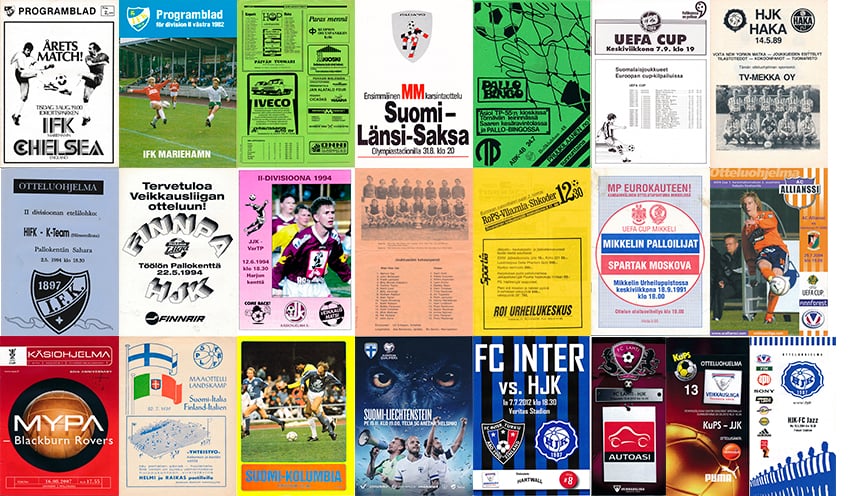
Many of you will know that I have been working with my Finnish friend, O-M Matihalti on his famous social media project that I featured here In a nutshell he is collecting ONE programme PER club PER season from 1967/68 to 2017/2017. This is being preserved as a huge project charting the social -economic, political and, of course, sporting life in England and Wales over those fifty years.
I thought it best if I added an update. We are making great progress although some clubs are much more difficult than others so far.
O-M comments, “Many moons ago I had this brilliant brainstorm of mine of collecting one programme per club per season. Little did I know what a project this would be. Without Steve, whom I got acquainted to back in March of 2024, getting anywhere near finishing the task would have been practically impossible. There’s been plenty of other people helping Steve. One of them is Stephen Morris. (Thanks, we shall meet one day.)
I am eternally thankful for all the help fellow collectors have been giving on the way to finalize the task. Getting back to Steve… he has swapped hundreds of programmes helping me to fill the gaps and scanned an enormous number of programme covers for me. One of the biggest challenges I have found is the high cost of postage to Finland. I can arrange postage to/from here via Steve. I have many thousands of programmes from Finland that l can exchange for my wants. Obviously you are most welcome to visit beautiful Finland …. probably best in Summer!!! Things to be done… are to meet Steve in person (I know he’s deaf but we will get by), to visit a West London programme fair (Hi, Mark, Barry, Lee and Les – Steve has told me a lot about you all so I’d love to visit) and anyone else in the UK who wants to say “hi.” Meanwhile, I will be pleased to help any collector who is interested in Finnish programmes.”
Thanks, O-M. I am really excited to get back to Finland. I was there in 1975 ….. I guess that makes me “old” or “urgammal,” as they say in certain parts of Finland.
Those who I would like to applaud publicly are:
Lee Hermitage of NWM Football
Brian at Brian’s Football Memorabilia
Mark Barnes the co-owner of Welling Collectables and of the West London Programme Fairs
… but the biggest, biggest (drum roll, PLEASE) shout out is for Stephen Morris. He has really engaged in the project and diligently searched for dozens of teams for O-M. He has huge stocks of most UK teams and I have always had hugely positive trades with him (both privately and for the project.) Everybody else I have spoken to speaks highly of him too.
He has a terrific offer on currently with a Super 50p Sale. He has tens of thousands of club programmes from the 70s to the 20s all at 50p. As my way of thanking him, if you take 50 programmes at 50p, I will double that with 50 random programmes from my own collection. Seem fair?
Any thoughts, questions, suggestions, kind wishes or, well, anything just get in touch with O-M or me.
Many thanks indeed, to everyone.
Torino FC
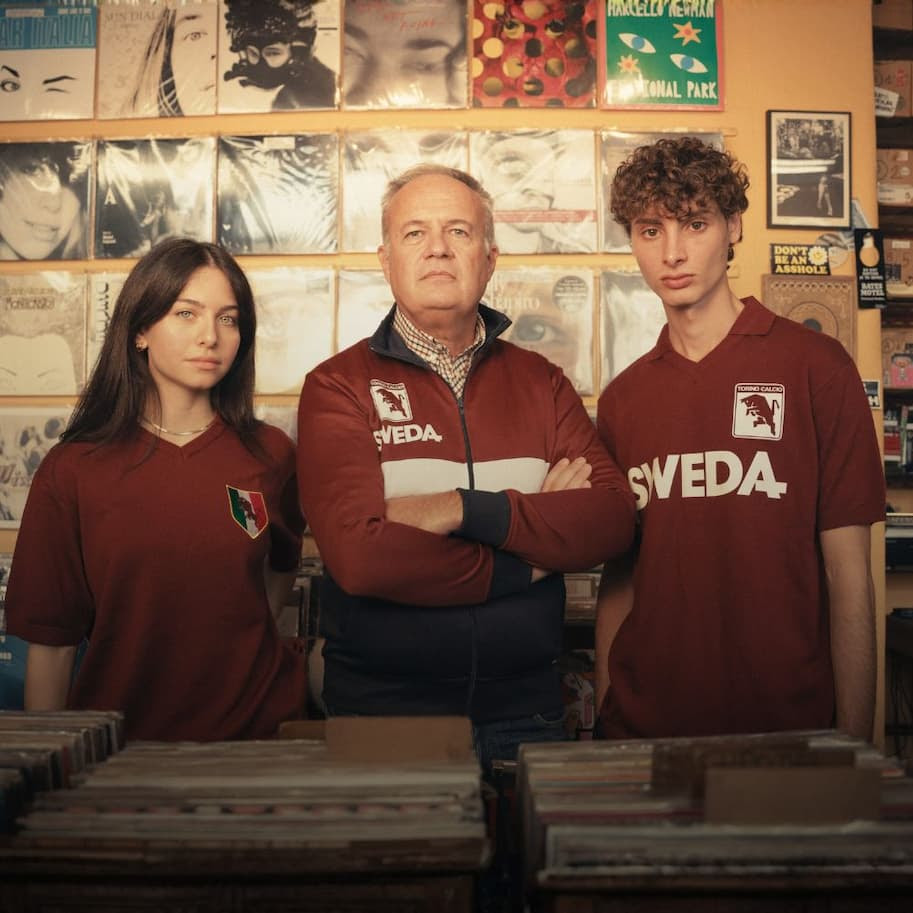
It was good to get a newsletter from our friends at COPA today about the recent launch of more Torino kit. Torino is a proud, working-class club with a large and committed fanbase. It has not had the success of La Juve, I admit but it is a club held in the heart of many, not least because of the Superga tragedy. The Superga air disaster (Italian: Tragedia di Superga, “Tragedy of Superga”) occurred on 4 May 1949, when a Fiat G.212 airliner of Avio Linee Italiane, carrying the entire Torino football team (popularly known as the Grande Torino), crashed into the retaining wall at the back of the Basilica of Superga, which stands on a hilltop near Turin. All thirty-one people on board were killed. The other clubs in Serie A decided to proclaim Torino winners of the 1948–49 Serie A season The event is still remembered annually.
Torino FC
Forever Granata
From the glory of the 1976 Scudetto to the remarkable 1984 – 85 season, Torino FC has always been a club defined by passion, determination and an enduring love for its famous maroon colours. Two unforgettable chapters in the history of Il Toro, united by legendary players, proud traditions and the spirit of the Granata. I granata = The Maroons because of the colour of the shirts.
The new Torino FC x COPA Retro Collection celebrates this legacy with two iconic shirts from 1976 – 77 and 1984 – 85.
Two generations, two remarkable stories, and one passion that has never faded.
Two iconic eras. One enduring passion.
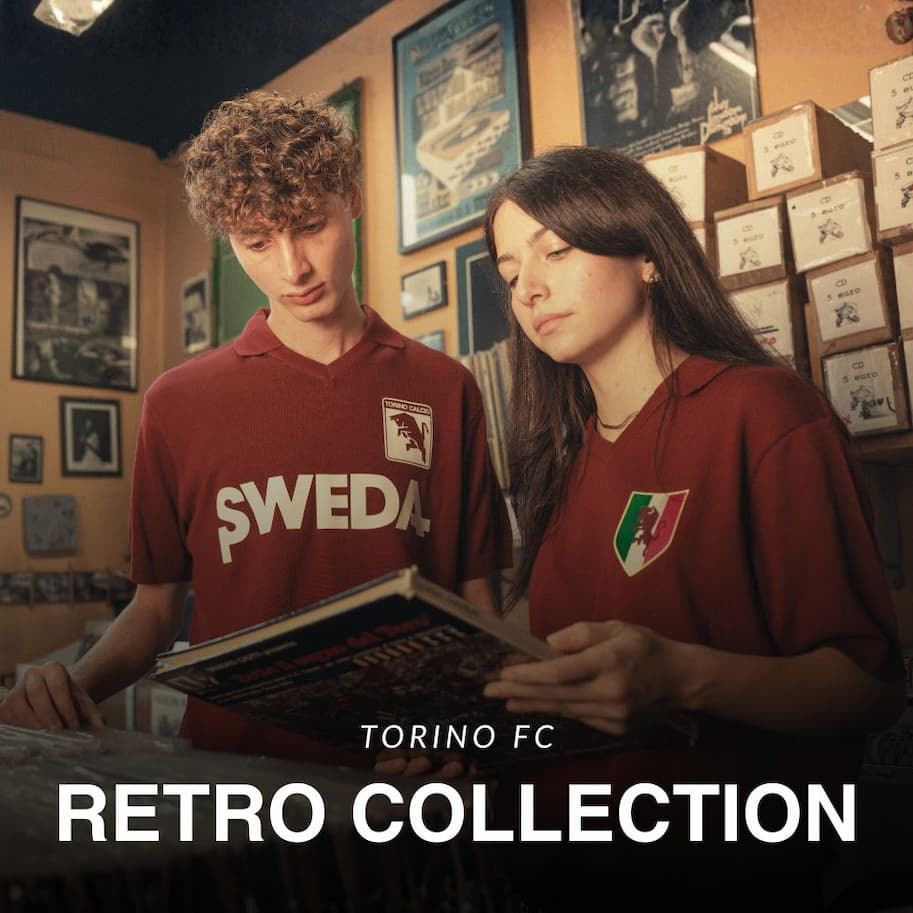
From the historic 1976 Scudetto to the unforgettable 1984 – 85 season, rediscover the legendary Granata colours and the football heritage that has united generations of Torino supporters.
Explore Torino
Black Pioneers 4
Celebrating Black Pioneers of Women’s Football, part 4.
Brenda Sempare, Charmaine Hooper, Portia Modise
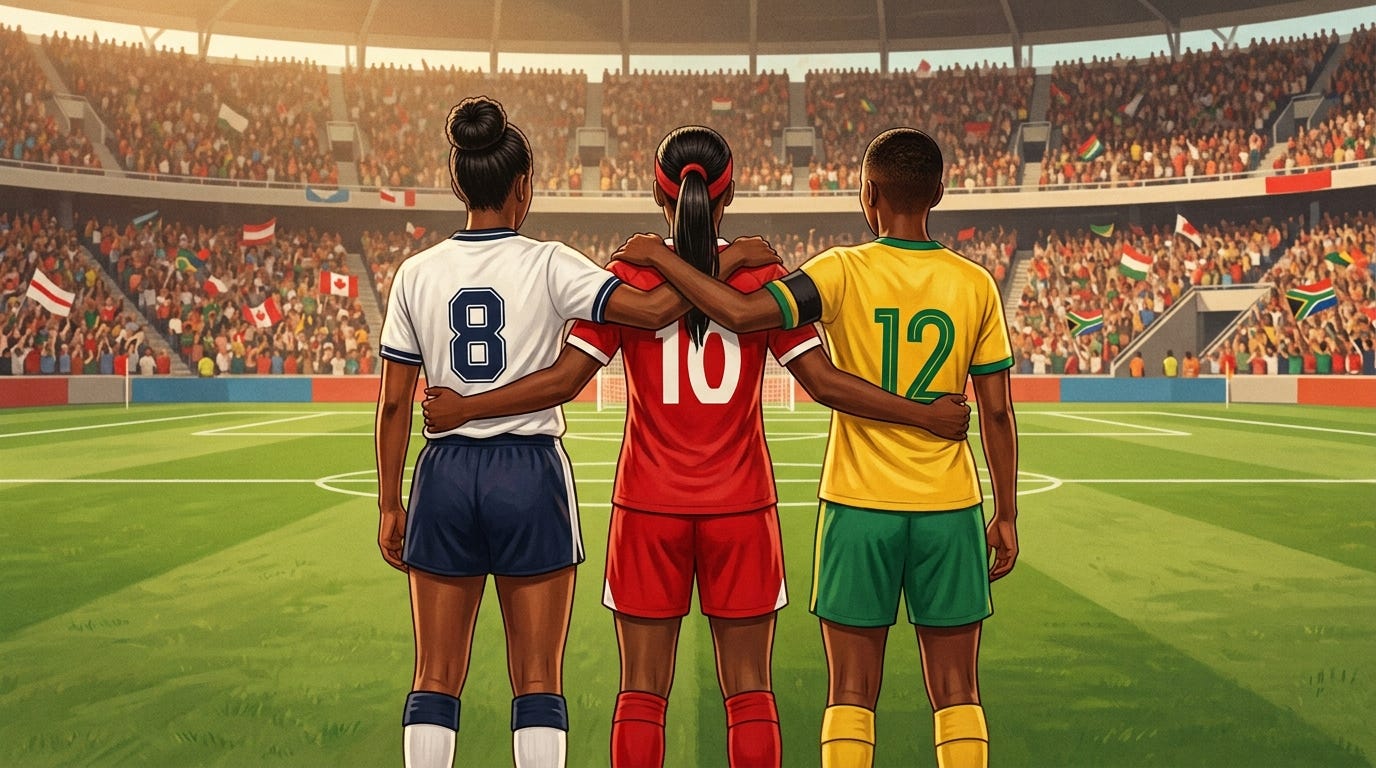
Part four of Clare McEwen’s mini series celebrating the Black women of women’s football history for Black History Month.
Brenda Sempare
Brenda Sempare was described by Hope Powell as, “outrageously skilled…for me, she was one of the best players ever to pull on an England shirt.”
She scored crucial goals for club and country and was one of the finest players of her generation.
Sadly, I can’t find anything about Brenda’s early life and how she got into football.
In fact, details about her life and career are pretty hard to find: born in 1961, played her senior football for Friends of Fulham and Bromley/Croydon, and made her England debut in 1983.
But Brenda has left a trail of footballing moments, footballing stories, to document her time as a player.
Sempare made her debut for England in 1983 against the Republic of Ireland. The next year, she was part of the England squad who reached the first UEFA Women’s European Championship final – losing to Sweden on penalties.
In 1985 Brenda scored one of the most important goals of her career at the Mundialito in Italy. England had reached the ‘little World Cup’ final against hosts Italy.
Having lost to Denmark, drawn with Italy, and beaten the USA in the group stage, they made the final. It was played in front of 10,000 people and the second half was shown on Italian TV.
Brenda scored a crucial goal in the 3-2 win over the hosts (Marieanne Spacey scored the other two). England lifted the Mundialito trophy to become unofficial World Champions.
She Can Kick It is a reader-supported publication. To receive new posts and support my work, consider becoming a free or paid subscriber.
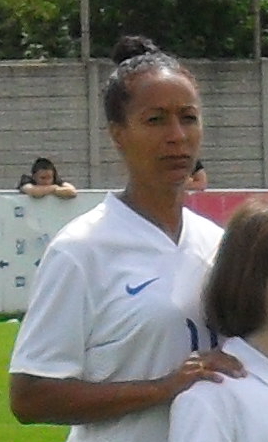
By Sevcoteehee – Own work, CC BY-SA 4.0, https://commons.wikimedia.org/w/index.php?curid=42213410
1985 was an all-round good year for Brenda Sempare, as she was influential for both club and country. Her performance for Friends of Fulham in the 1985 FA Cup final is the stuff of legend. “The Sempare Final” as it became known, gives you an idea of just how good she was – she ran the show that day and Fulham claimed their first FA Cup in a 2-0 win over Doncaster Belles.
She again represented England at the 1987 UEFA Euros, helping them reach the semi-final. She was working as a postwoman at the time.
In 1992, she joined the newly formed Bromley Borough – later to become Croydon – started by Hope Powell and Sue Law. As a new team, they had to start at the bottom of the pyramid. It was clearly the wrong league for them and they cruised through a few levels of the pyramid, destroying the teams in their wake. The team made it all the way to the semi-final of the FA Cup that season, only halted by the treble-winning Arsenal.
Brenda played in England’s first Fifa World Cup in Sweden in 1995. She played all four games, including wins over Canada and Nigeria. She played her final game for her country in their quarter-final loss to Germany, having racked up 55 appearances and five goals.
Her international career may have ended but Brenda Sempare wasn’t quite done.
In 1995-96, Croydon won the league and FA Cup double. They were unbeaten in the league that season. But the title came down to Brenda Sempare scoring their winning goal against Arsenal. They won the title on goal difference over Doncaster Belles.
The week before she’d also scored in the penalty shootout to win the FA Cup final over Liverpool.
Brenda Sempare retired not long after and was inducted into the English Football Hall of Fame in 2010.

Charmaine Hooper
Canadian player Charmaine Hooper was born in Georgetown, Guyana in 1968. Her father was a diplomat so they moved around. She began playing football with her brother when she was eight. By 18, she was representing Canada.
Born in Guyana’s capital, Charmaine’s first experience with football came when the family moved to Zambia. She began playing with her brother and his friends at school.
The family moved to Ottawa, Canada in the late 1970s and it was here Charmaine joined her first girls’ team: Nepean Hotspurs.
She played college football/soccer for the NC State Wolfpack team (North Carolina State University), setting various records along the way – most goals in a season (26), most consecutive games with a goal (7), and tied for most goals in a game (4). Plus wider accolades like Atlantic Coast Conference (ACC) highest goalscorer and All-ACC for three consecutive years. She was also twice named an first-team NCAA All-American.
Credit: Canadian Press
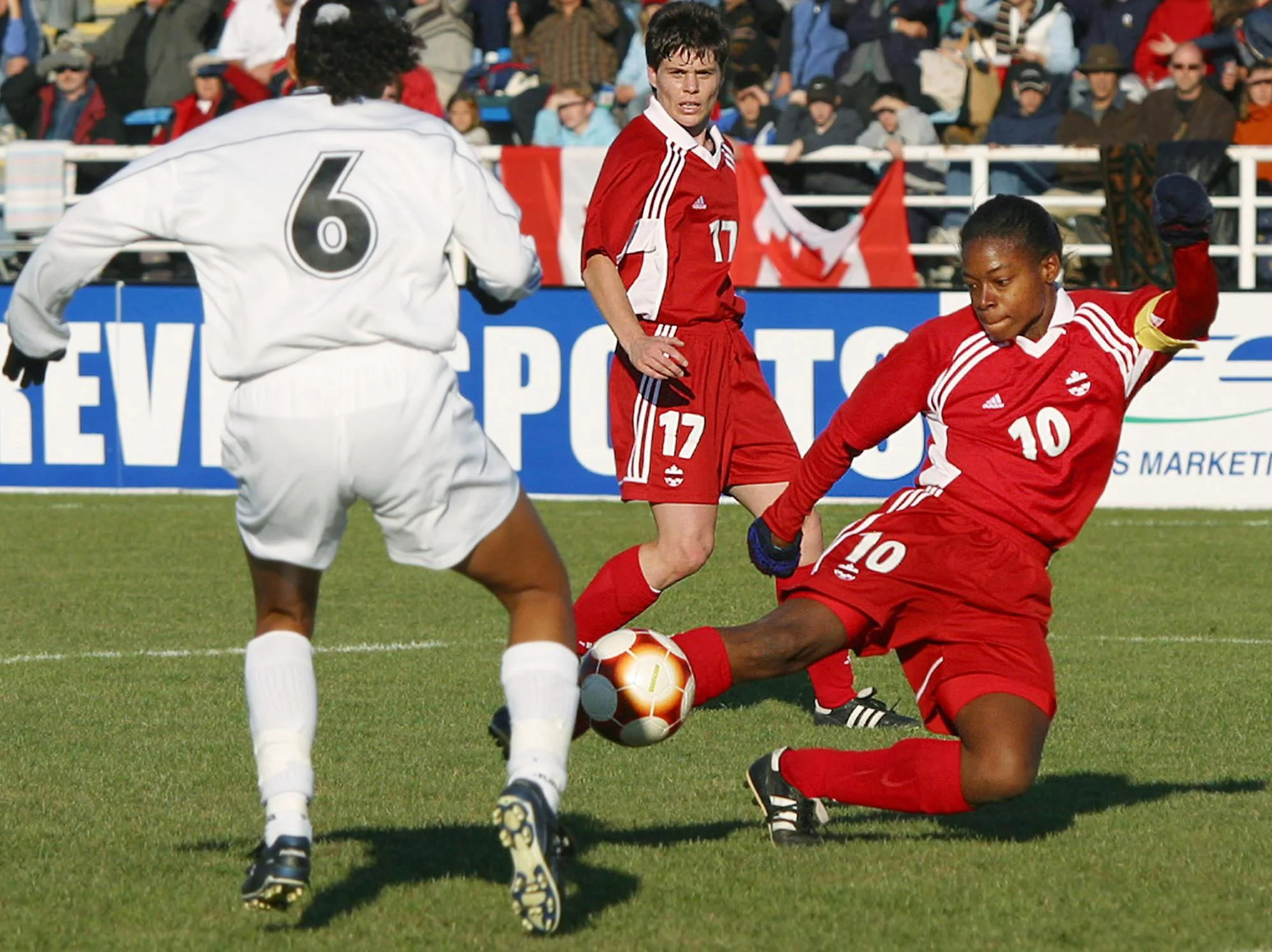
Creator: Rob Kruyt
The team were also successful during this period, winning an ACC championship and reaching the NCAA final – their best ever finish – plus semi- and quarter-finals.
Charmaine Hooper was part of the very first Canadian women’s national team in 1986. A team that the Canadian Soccer Association wasn’t really giving much backing to.
Their coach Neil Turnbull was told that if they lost both games in their debut two-game series against the USA, they wouldn’t get funding to carry on the programme. Hardly supportive. They lost the first 2-0 but won the second 2-1 – saving the programme. Charmaine Hooper, aged just 18, assisted Canada’s first ever international goal in that second game. Geri Donnelly scored both and remembers their first goal came “on a great pass by Charmaine Hooper”.
In February 1999, Charmaine scored both goals for a Fifa World All-star team that inflicted the USA’s first home defeat in over 40 matches.
Hooper played in three Fifa World Cups: 1995, 1999, and 2003. At the first two, she was recognised by the Fifa Technical Study Group as one of Canada’s outstanding players. After the 2003 event, they described Charmaine as an “inspirational leader”. And it was this World Cup that she captained the team to their best ever finish, fourth place.
By then she had moved from forward to defence but at 35 years old, she headed Canada’s winning goal against China in the 2003 World Cup quarter-final. She played all 540 minutes of Canada’s six games and was named in the Team of the Tournament.
Known as a hugely physical player, Hooper was also tough off the pitch. In 2006, while still captain, she refused to play two friendlies. She and two other players alleged that the Canada coach had pressured them to break their club contracts and join the Vancouver Whitecaps.
Ultimately, they were suspended and lost their funding.
Charmaine Hooper played 129 games for Canada and scored 71 goals.
As well as a stellar international career, Charmaine had a globe-trotting club career.
Due to a lack of league in the US (or indeed Canada), players often moved abroad. Hooper played in Norway, Italy, and Japan before moving to the United States. During her time in Japan, she played as a professional for Prima Ham FC Kunoichi. She reportedly earned $100,000 per season while playing in Japan. She returned nearer home after four seasons, having won everything she could out there.
When the Women’s United Soccer Association (WUSA) professional league began in 2001, Charmaine signed with Atlanta Beat. She played all three seasons of the WUSA, totalling 34 goals in 59 games.
She later played for the Chicago Cobras, the New Jersey Wildcats and Fort Worth FC before retiring in 2008.
Charmaine Hooper was inducted into the Canada Soccer Hall of Fame and Canada’s Sports Hall of Fame in 2012.

Portia Modise
South African footballer Portia Modise was the first African to score 100 international goals. She got into her first team by borrowing someone else’s birth certificate.
Born in White City, Soweto in 1983, Portia Modise began playing football on the streets aged around seven.
From an early age she’d told her mum she wasn’t a girl and didn’t want to play with girl’s toys. But she did very much want to play football – a boys’ game at the time.
She joined Soweto Rangers under-10s, pretending to be a boy, but ran into trouble when registration required a birth certificate.
Not willing to give her opportunity up, she asked the boy next door if she could borrow his – he agreed.
She later joined the women’s section of Jomo Cosmos in Johannesburg.
Modise was once scouted for the School of Excellence alongside South Africa men’s legend Steven Pienaar. Unfortunately, she couldn’t join because they only accepted boys. They suggested she find a women’s team.
She joined Soweto Ladies in 1996 – aged around 12/13 – after the coach had been impressed with her playing style.
Her mum wasn’t particularly happy with her pretending to be a boy and playing football but when she saw Portia play for Soweto Ladies, she began to understand.
In the year 2000, aged 16, Portia Modise was called up to the senior South Africa international team. She was the under-19s captain at the time.
She played in all of her country’s games in the 2000 Women’s African Football Championship and scored her first goal against Zimbabwe. She also played in South Africa’s final defeat to Nigeria.
Modise continued to play for Soweto Ladies for many years and in the 2001-02 season scored 51 goals in the league. In 2003, she was invited to trial with Arsenal Ladies.
Manager Vic Akers was impressed with her but the deal couldn’t get done. Reports vary but somehow the move fell through over money.
In 2005, Portia was one of two Africans nominated for Fifa World Player of the Year – the other was one of Part 3’s stars, Perpetua Nkwocha. Although Germany’s Birgit Prinz won.
By this point Portia was captaining her country and in 2006 she was named Player of the Championship at the African Women’s Championship. She was also voted in the top three of the CAF Women’s Footballer of the Year and was in the Fifa World All-Stars game before the 2007 World Cup draw.
Modise quit international football in 2008 because of head coach Augustine Makalakalane. He was later sacked after accusations of sexual harassment and homophobia. But by then, Portia Modise had lost four of her prime international playing years.
In 2012, she was able to safely come back to the international team that went to South Africa’s first ever Olympics. In their first game against Sweden at the City of Coventry Stadium, Portia scored a ridiculous goal from the centre circle – although the team lost 4-1. A goalless draw against Japan at the Millennium Stadium in Cardiff was their only point of the group stage.
She went into the Olympics with 71 goals in 92 caps. By May 2014, she had reached 98 goals, four coming from a 13-0 qualifying win over Comoros. In October, she scored number 99 and 100 against Algeria. She became the first African footballer – woman or man – to reach 100 international goals. She had already passed 100 caps.
In April 2015, she scored her last international goal in a match against Botswana. She retired the following month having scored 101 goals in 124 games.
It’s worth noting that she reached these incredible numbers having played all but two seasons of her club football in South Africa’s amateur leagues. The two professional seasons were with Fortuna Hjørring in Denmark.
Not bad for a girl who had to borrow a birth certificate to start her journey.
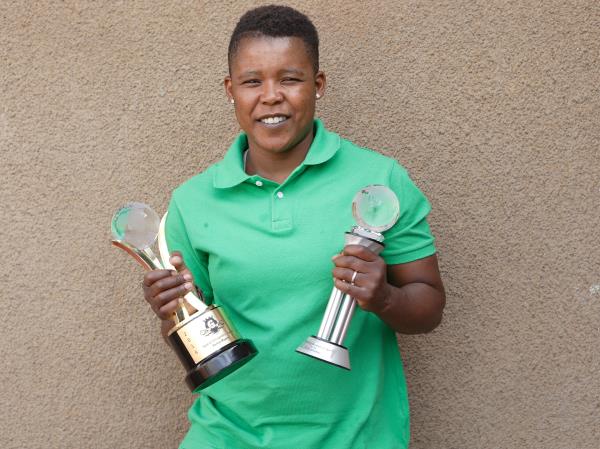
Credit: Portia Modise Foundation
Further reading:
https://www.protagonistsoccer.com/coverage/2025/2/17/charmaine-hooper-usl-legend-soccer-canada-canadian-nationalteam
https://nationalfootballmuseum.com/halloffame/brenda-sempare

Part 1 featuring Emma Clarke, Kerry Davis and Hope Powell can be found here:
✍️ Written version of part 1
🎙️Audio version of part 1 read by me (free to all)
Part 2 featuring Beverly Ranger, Mary Phillip, and Rachel Yankey can be found here:
✍️ Written version of part 2
🎙️Audio version of part 2 (read by me – Paid subs)
Part 3 featuring Sissi, Briana Scurry, and Perpetua Nkwocha can be found here:
✍️ Written version of part 3
🎙️Audio version of part 3 (read by me – Paid subs)
Subscribe to She Can Kick It
By Clare McEwen · Launched 4 years ago
Women’s football – the past, present, and future of the game – written by author and journalist, Clare McEwen (who is still raging about being denied football as a kid but now channels it positively – mostly – here).
ShareBlack Pioneers
Celebrating Black Pioneers of Women’s Football, part 3.
This is part three of Clare McEwen’s mini series celebrating the Black women of women’s football history for Black History Month.
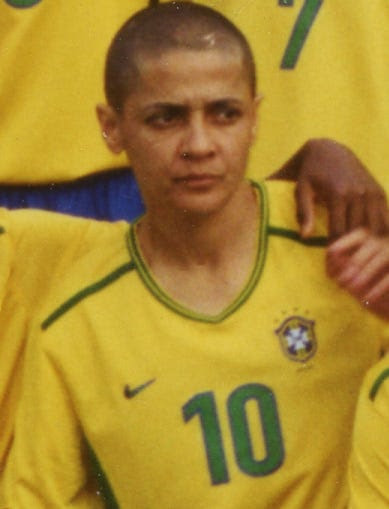
Sissi
Sissi – Sisleide do Amor Lima – was born in a small town in Brazil in 1967. She began playing with her older brother and father when she was around seven years old – at a time when women were banned from playing football in the country.
And this wasn’t a ban on using pitches, like it was in England and other countries across the world. Brazil actually made it illegal for women to play football between 1941 and 1979. Being caught playing meant being detained by the police – even if you were a child.
Being told it was a game for boys wasn’t acceptable to Sissi – her rebellious nature meant she continued undeterred.
Anything and everything served as a ball for Sissi – oranges, balled up socks, even the heads of her dolls (I’d have felt the same Sissi!).
At age 14, she left home to follow her dream in Salvador, Brazil.
In 1988, she became part of the Brazil ‘national’ team that built the platform for Marta’s generation. Sissi was part of the club team EC Radar who represented Brazil in the Fifa World Cup test event in China.
At the inaugural women’s football event at the 1996 Olympics she scored against Germany and the team finished in fourth – a really strong showing after the 1995 World Cup where they finished bottom of their group (albeit on goal difference).
It was the 1999 Fifa World Cup that brought the attacking midfielder’s name to the world.
Brazil had an excellent tournament, finishing top of their group – a group that also had Germany, Italy, and Mexico in it.
Sissi scored seven goals across the competition – sharing the Golden Boot with Sun Wen.
None were more important than the one against Nigeria in the quarter-final.
The game had been a dramatic one, although it didn’t start that way. After 35 minutes, Brazil were 3-0 up and cruising to the semi-final. But whatever was said in Nigeria’s half-time talk did the trick and by the 85th minute, they were level.
The game went to Golden Goal extra time.
In the 105th minute, Brazil won a free kick just outside the box. Sissi stepped up, took a breath, and scored an absolute worldie into the top left corner, squeezing it past the goalkeeper’s outstretched hand.
It was the first Golden Goal in women’s football.
And it changed Sissi’s life.
Brazil lost out to the US in the semi-final but had officially stamped their mark on the international game.
But it turned out to be Sissi’s last World Cup. She didn’t play for her country again after 2000.
Sissi continued to play her club football in Brazil for the next couple of years before signing for Bay Area CyberRays (later San Jose CyberRays) in 2001 to play in the US’ first professional league.
She continued to play in the US after the league folded and in 2009 signed for FC Gold Pride as their assistant coach.
It turned out she wasn’t quite ready to give up playing and made three appearances for the team, making her the oldest player in the league at 42.
Sissi was inducted into the International Football Hall of Fame in Pachuca, Mexico in 2019 (alongside some big names in men’s football, Gabriel Batistuta and Didier Deschamps for example) and she continues to coach youth football in the US.

Briana Scurry
Briana Scurry’s legend was probably secured the second she saved Liu Ying’s penalty kick in the 1999 World Cup final.
On home soil, in front of 90,000 people, USA’s Brandi Chastain scored her famous penalty to beat China. But it was Scurry’s controversial save that set her up.
Briana was born in Minneapolis, Minnesota in 1971. A natural athlete, she won a range of sporting accolades at school before going to the University of Massachusetts.
During her university career, she kept 37 clean sheets in 65 starts.
Briana finished her college career in 1993 and began her international career a year later.
Her first cap was against Portugal in March 1994, where she kept a clean sheet.
She became the US number one in her first World Cup in Sweden 1995.
Controversially, she was sent off in the second game having been judged to have handled the ball outside the box while kicking from her hands. A straight red seemed harsh. [Mia Hamm took the gloves and made two saves in the eight minutes of time left].
Briana played every minute of the historic first Olympic women’s football tournament in Atlanta 1996. The US team won gold.
This wasn’t just a historic event for women’s football, the Olympic movement, and the US team. It was the completion of Briana Scurry’s dream.
Having watched the US ice hockey team beat the Soviet Union at the 1980 Winter Olympics, eight year old Briana decided she wanted to be an Olympian. As a teenager, she refined the goal to compete in the 1996 Summer Olympics.
She wrote on a piece of paper “Olympics 1996. I have a dream” and stuck it on her bedroom wall. It was the first and last thing she saw each day.
Dream achieved at Atlanta.
In 1999, she conceded only three goals in the World Cup, keeping four clean sheets, including a wonderful performance against Brazil in the semi-final.
Briana Scurry had the tournament of her life, culminating in that penalty save that opened the door to victory. But it remains a controversial save. When Liu Ying struck her spot kick, Scurry was already several feet off her line. Briana later admitted it.
In her defence, it seemed a regular occurrence at this point in history – everyone was doing it. Briana later said she was testing what the referee would do if she came off the line too early. Her tests showed that the ref wouldn’t spot it, so she continued to do it. She wouldn’t get away with it now.
Having been dropped from the number one spot for the 2000 Sydney Olympics (although she was in the squad), Briana won her place back after strong performances with her club Atlanta Beat.
She was one of the founding players of the world’s first professional women’s league, Women’s United Soccer Association (WUSA).
She continued to be the first choice for the 2003 World Cup and the 2004 Olympics.
Briana Scurry played 175 times for her country between 1994 and 2008 – a stellar career. But there was one more opportunity for controversy.
Reaching the end of her career, Scurry had been sidelined for Hope Solo in 2005. During the 2007 World Cup, Solo was first choice goalkeeper until the semi-final. And then US manager Greg Ryan picked Scurry ahead of her.
He said it was because Scurry had an exceptional record against their opponents Brazil – she had a 12-0 record with eight clean sheets.
Hope Solo was not impressed.
And she may have had a point. The game was not the USWNT’s finest and they ended up losing 4-0.
Briana continued as one of the US team’s goalkeepers until Pia Sundhage dropped her in 2008.
Briana Scurry became the first African-American woman to enter the US National Soccer Hall of Fame.

Perpetua Nkwocha
It was often tough for girls to play football in Africa. Perpetua told Vanguard in 2014 that her father forbade her from playing and beat her to try to discourage her.
But it didn’t quell her passion and it didn’t stop her playing out in the street with the boys. It also didn’t stop her from getting to the top of the game.
Born in Imo State in 1976, Perpetua Nkwocha went on to captain the Super Falcons and redefine football for women in her country.
She began playing organised games at her secondary school, and when the school represented her local area in a competition, Perpetua was selected to play.
She was later scouted by clubs in the area and played for Rivers Angels and Pelican Stars in the Nigerian league.
She made her debut for Nigeria in 1999 and played her first major tournament at the Sydney Olympics in 2000 – where she scored against China.
Her strength and skill in midfield soon became an integral part of the Super Falcons. As did her goals.
She scored 80 goals across 99 games, won five African Women’s Championships and played in four Fifa Women’s World Cups between 2003 and 2015.
Her defining moment came in 2004 at the African Women’s Championship in South Africa (now known as the Women’s Africa Cup of Nations, WAFCON). She scored a record nine goals across the tournament, including four goals in Nigeria’s 5-0 demolition of Cameroon in the final, in Johannesburg.
Perpetua won the CAF African Women’s Footballer of the Year in 2004, 2005, 2010, and 2011.
In 2007, she moved to Sweden to play her football, joining Sunnanå SK. She described her move to Sweden as a “huge turning point” because she began to earn enough to give her financial independence – and to help support her family back in Nigeria.
She spent nine seasons at Sunnanå and made her last World Cup appearance at Canada 2015 when she was 39 years old.
She became a player-coach at a lower league Swedish club and spent time coaching teenage Afghan refugees in Sweden. In 2016, she was appointed assistant coach of the Super Falcons and the team went on to win the 2016 WAFCON in Cameroon.
Highlights:
Semi-final 1999 USA v Brazil:

Final penalty shootout 1999 USA v China:

Quarter final 1999 Brazil v Nigeria: https://www.fifa.com/en/watch/4SrO6I5W3LLtXD7V3oUH8f
Further reading:
https://inside.fifa.com/womens-football/news/sissi-interview-international-womens-day-marta-formiga-brazil
Part 1 featuring Emma Clarke, Kerry Davis and Hope Powell can be found here
ShareCommon Goal
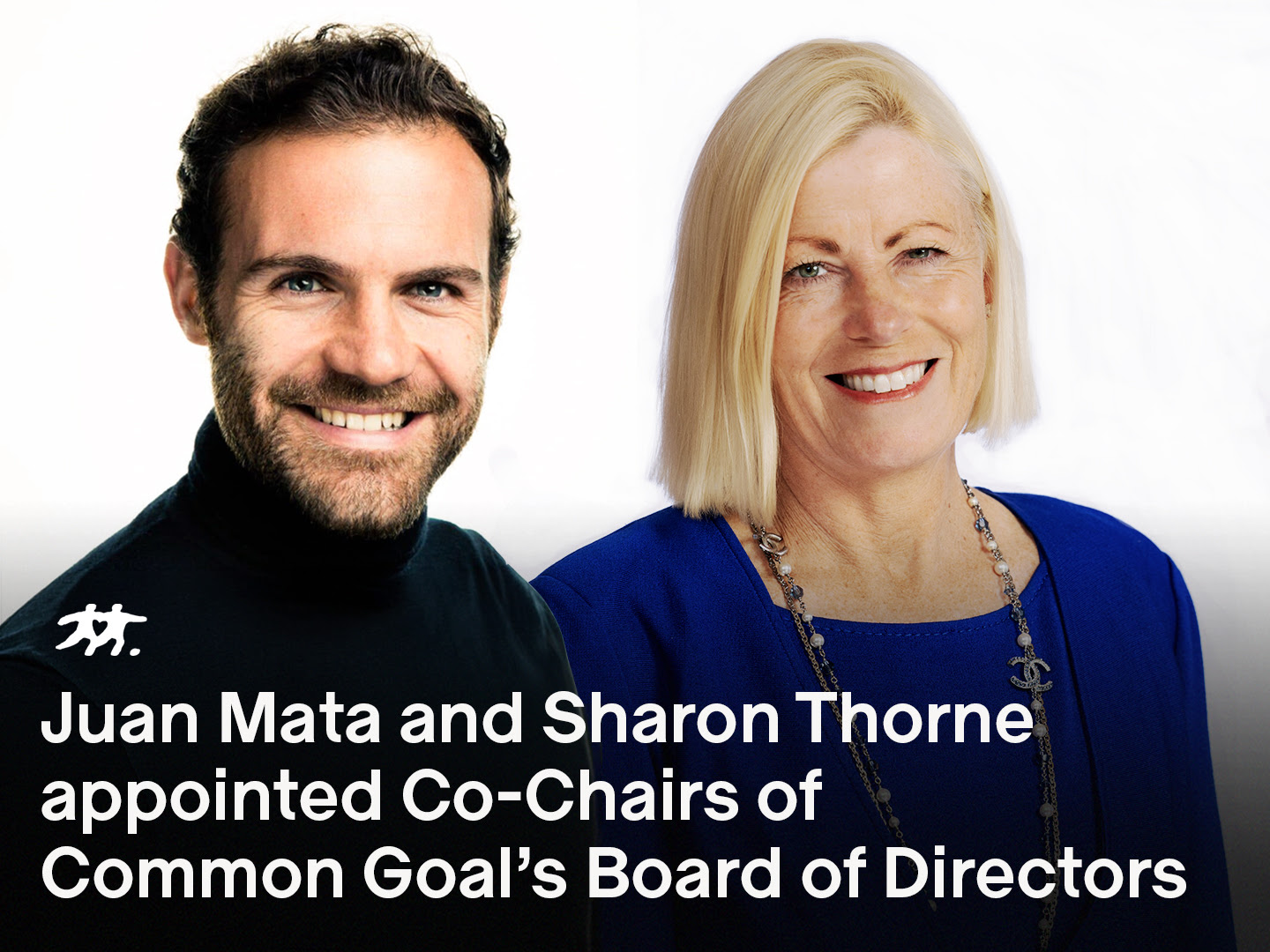
Yesterday’s blog was so disappointing. Mansfield Town have offered to host a Reform event. Today’s is the exact opposite and so uplifting. It will hopefully remind us all of the power of football to unite.
Common Goal
We are excited to announce that Juan Mata and Sharon Thorne have been appointed Co-Chairs of Common Goal’s Board of Directors, bringing together leadership from football and business to help shape the next chapter of our organisation.
Two leaders. Different backgrounds. One shared belief in the power of football to drive positive change.
For Juan, who pioneered the 1% pledge in 2017, this marks a new chapter in a commitment that has continued to grow for more than a decade.
“By becoming Co-Chair, I want to send a strong message to everyone: the mission is more urgent than ever, and there is no time to wait to take action.”
— Juan Mata, Co-Chair, Common Goal
Sharon, former Global Chair of Deloitte and current Senior Independent Director of Rio Tinto, brings decades of global leadership experience across business, governance, sustainability and purpose-driven transformation.
“Football has an extraordinary ability to bring people together, and its potential becomes even greater when we view it not only as an industry, but as a global vehicle for delivering equality, opportunity, and positive change. I want to help Common Goal build those bridges and create the conditions for a thriving football for good sector.”
— Sharon Thorne, Co-Chair, Common Goal
Together, they will help strengthen Common Goal as the Home of Football for Good, connecting people, organisations and sectors around a shared ambition to unlock more of football’s potential for positive change.
Their appointment marks another important milestone in Common Goal’s evolution, as we strengthen our global leadership, put our community at the centre and build for the future.
“After more than 20 years with Common Goal, I’ve seen how much we have evolved — and how important it is that we keep evolving. This is one of those moments. As we build the organisation we need for the future, our community has to remain our foundation: bringing us closer to the people doing this work every day, allowing their experience to shape us, and making us stronger in what we can achieve together.” — George Springborg, Chief Community Officer, Common Goal
Common Goal’s legal entities in the United States and Germany have also restructured under a single global governing Board. The Board held its first in-person meeting following the merger in Boston, USA on 11 September, which included a community roundtable with Common Goal member organizations Boston SCORES, Project GOAL, Reclaim Childhood, Soccer Unity Project, and Soccer Without Borders (SWB) and a site visit to a football for good session in East Boston with SWB.
Together, these changes are about making Common Goal stronger for the work ahead — closer to its community, more global in how it thinks and works, and better positioned to mobilise more of football around social change.
Following a FIFA World Cup 2026 that created new opportunities to connect football’s biggest stage with community impact, Common Goal is already looking towards the FIFA Women’s World Cup Brazil 2027 and the opportunity to go further.
Full details at Common-Goal.org
Mansfield Town
Last week I showcased a very uplifting story about Bell FC in Epping. (Link ) Many will remember that the Shirt Project was set up by Bjorn Heidenstrom to support the United Nations Commissioner for Refugees
He cycled from Norway to South Africa as he wanted to do something POSITIVE.
So, it’s particularly disappointing to see Mansfield Town supporting Reform UK by hosting their Christmas Party.
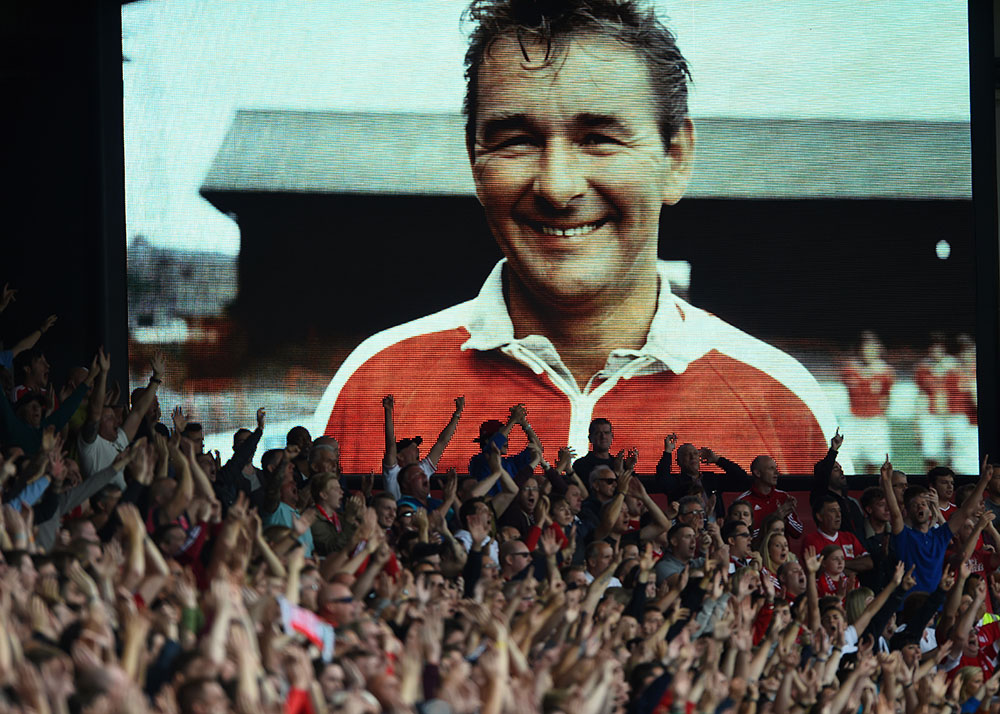
Whatever one’s political views supporting an organisation that is openly and avowedly NON inclusive is the very antithesis of sport “bringing us together.” If Mansfield Town had illusions of being a community club a la QPR or Brentford they have well and truly blown it with this event. For those who are not huge football fans, the current manager at the club is none other than Nigel Clough whose father was the great Brian Clough. Clough senior was a lifelong socialist and anti fascist. He would be turning in his grave if he knew about this event. He was a founder sponsor of the Anti Nazi League alongside Jack Charlton. He signed the organisation’s founding statement in 1977. It warned of “the “worrying prospect of a Nazi party gaining significant support in Britain.” This was a significant boost to the Anti-Nazi League at a time when the fascist National Front was having an impact on British political life, and overt racism was widespread in English football. Fortunately in the last 50 years progress has been made in stamping out the racism and its associated violence.
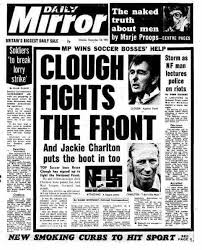
The chief guest at the event is Lee Anderson who this week is the Chairman of Reform UK (remember they are not an affiliated party.) He is a divisive individual, being polite, and The New Statesman took him to task for betraying Brian Clough’s ideals. (17 August 2023) so it is especially ironic his attendance here.
The event is getting much comment on Social Media groups and little reflects well on Mansfield Town FC.
I have written to Neil Bainbridge, the Senior Safeguarding Manager at Mansfield Town and explained how unacceptable I find the club supporting Reform. If he responds, I will add it to this post.
Edit: seven days have passed and I did not receive the common courtesy of a response from anyone at Mansfield Town.
Edit: twenty one days have passed and I did not receive the common courtesy of a response from anyone at Mansfield Town. It seems they are happy with the situation. Mmmm!
Black Pioneers
Celebrating Black Pioneers of Women’s Football, part 1.
Emma Clarke, Kerry Davis, and Hope Powell.
As always, I am delighted to spotlight Clare McEwen’s work and in this case even more so as it relates to (a) black players and (b) women players. We all know that they are often the most forgotten of all those who take the pitch. She says,
“This week I’m jumping on the Black History Month train and celebrating black women in football’s history.
I apologise for being proof that Black History Month is still needed since I’ve not specifically written a series on these women before.
As with much of the deeper history of women’s football, it’s hard to be completely sure of the facts when we go back in time. There are some anomalies in what’s written about my first black player today, but she has a blue plaque in North London declaring her as a “pioneering Black British female footballer”, and that’s the qualifier for this piece.
Emma Clarke
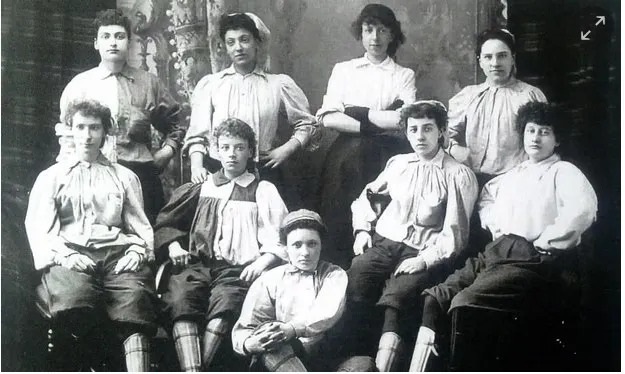
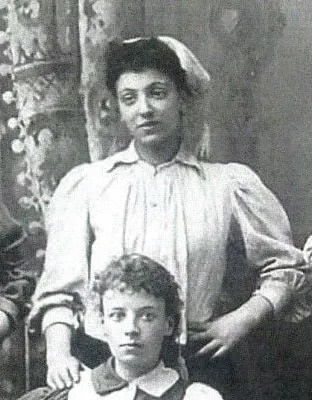
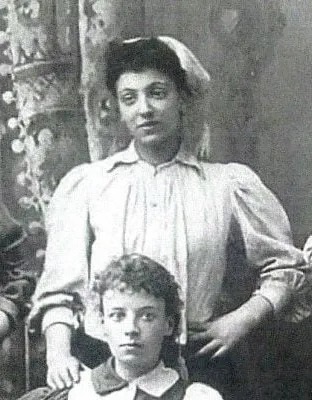
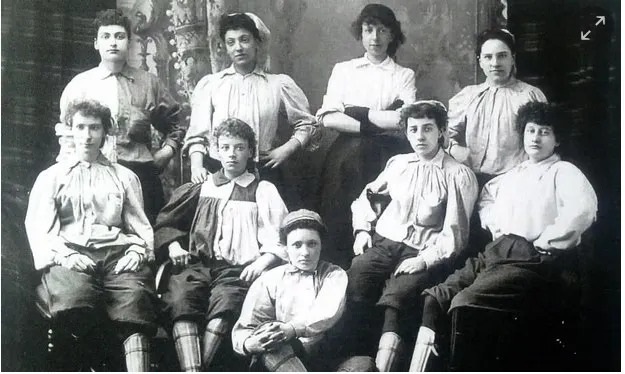
Emma Clarke played in one of the first documented games in England when in 1895 British Ladies FC played their North vs South game in Crouch End, London. Thanks to the spirit and organisational skills of Nettie Honeyball – who brought the British Ladies together – the game drew a big crowd.
Emma Clarke made her football debut in that game, in front of around 10,000 people.
As reported in Irish newspaper Northern Whig in June 1895, Emma played at right back, but other reports describe her as a ‘back’. Anyway, she was a defender and probably a versatile one. Actually, it appears she sometimes played in goal too.
Oh yeah, and on the wing according to the South Wales Daily News: “the fleet footed dark girl on the right wing”.
The importance was the playing, not the position.
Little is known about her background. It is thought the players earned a shilling a week for playing – so they were effectively professional. They also had their board and food paid for them.
In 1896, Emma made her debut for the breakaway team Mrs Graham’s XI, which toured Scotland. The matches drew big crowds and there was plenty of media interest around the team.
Emma Clarke’s football career continued until at least 1903 but little else is known.
Kerry Davis
Kerry Davis made her England debut in 1982. She was the first black woman to play for England. She became a crucial attacking force for her country for the next 16 years.
Born in 1962 in Stoke-on-Trent, England to a Jamaican father and English mother, Kerry grew up surrounded by racism. Football was her escape.
Women’s football still wasn’t visible then but she found a safe space and a chance to build a fantastic career.
The devastating England striker began her senior career at Crewe Alexandra. And it wasn’t long before the national team came knocking.
She started strongly by scoring twice on debut against Northern Ireland. The game was part of the European Championship qualification and Kerry continued to thrive in the qualification matches.
She scored four against Scotland in the next game. Across six Euro qualifiers, Kerry scored in five of them, netting 11 times in total.
The first UEFA-sanctioned Euros was played in 1984. Kerry scored in the first leg of the semi-final against Denmark to help England secure a place in the first UEFA final. She was England’s top scorer across the campaign.
It wasn’t to be for England, though, and they lost on penalties.
In 1985, Kerry was a key part of the England squad who won the Mundialito ‘little’ World Cup. She was impressive in both games against the Italians and off the back of it was signed by Italian semi-professional team Roi Lazio.
She went to Italy because she wanted a career in football. While there she played for Roi Lazio, Trani 80, and Napoli before returning to Crewe Alexandra in 1989.
She continued to represent England while in Italy, but often at her own expense.
Across the next 10 years she played for Crewe, Knowsley United (later Liverpool), Croydon, and Millwall Lionesses, and remained a key goalscorer for England.
She scored at Wembley in 1990 when England were beaten 4-1 by Italy and played all four 1995 Fifa Women’s World Cup games.
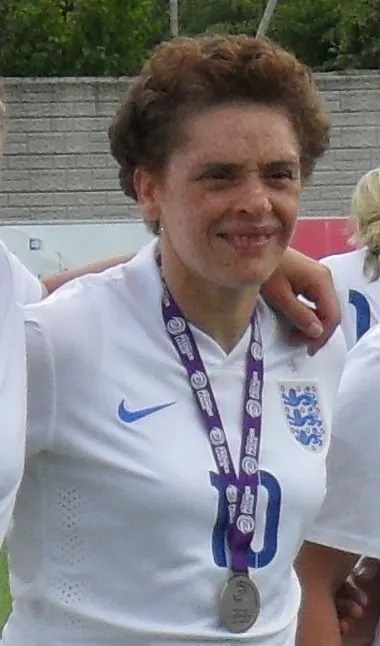
Kerry was a versatile player so also played in midfield frequently. Despite this, by the time her international career with the Lionesses had ended, Kerry had scored 43 goals in 90 games.
Her England scoring record was only surpassed in 2012 by Kelly Smith.
As well as the 1985 Mundialito with England, Kerry won two FA Women’s Premier League titles and an FA Cup with Croydon.
She was inducted into the National Football Museum’s Hall of Fame in 2022 and made an MBE in 2026.
Hope Powell
I’ve said it before and I’ll say it again: Hope Powell was instrumental in creating the setup that gives us the modern-day Lionesses.
Before that, she was an exceptional player.
Hope was born in 1966 in Lewisham, London. She made headlines in the newspapers when, aged 12, she was banned by the FA from playing for her school team. Because of the rules at the time, girls were no longer allowed to play alongside boys after age 11.
Hope joined women’s team Millwall Lionesses. Five years later, Hope was playing for the senior England team.
She made her debut in September 1983 against the Republic of Ireland in a qualifying game for the first UEFA Euros. At just 17 years old, she played in the first sanctioned European Championship final, in 1984.
During her playing career, Hope Powell won the FA Cup twice, with Millwall Lionesses and Croydon, the Women’s Premier League with Croydon, and two Mundialitos with England.
She played 66 times for England and scored 35 goals. She was Millwall Lionesses’ all-time top goalscorer.
And that isn’t even the most impressive part of her career.
In 1998, she became the first ever full-time coach of England’s women’s team. She was only 31.
She was instrumental in pushing the FA to open 20 Centres of Excellence across England. She oversaw the whole England setup from youth level through to the senior team.
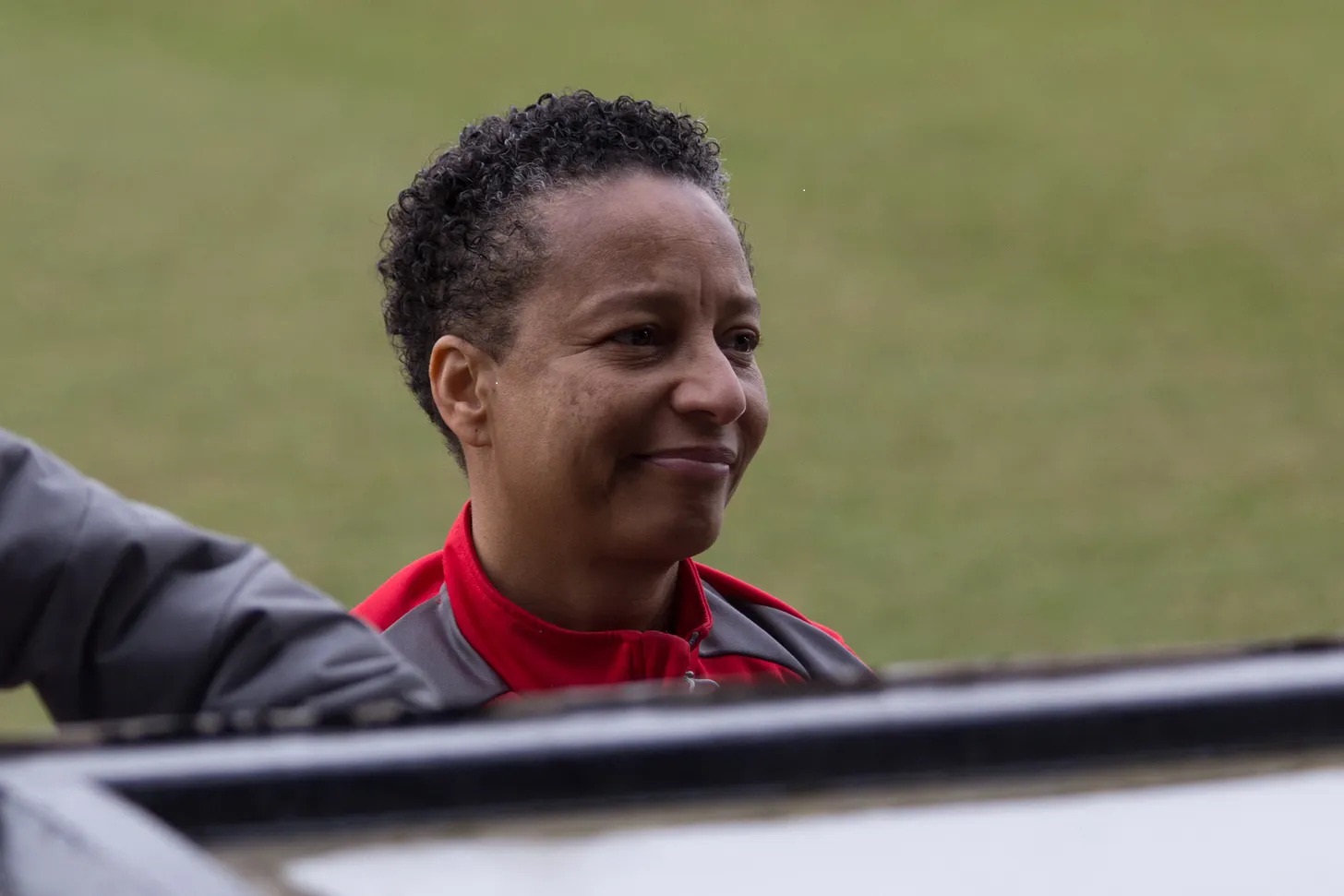
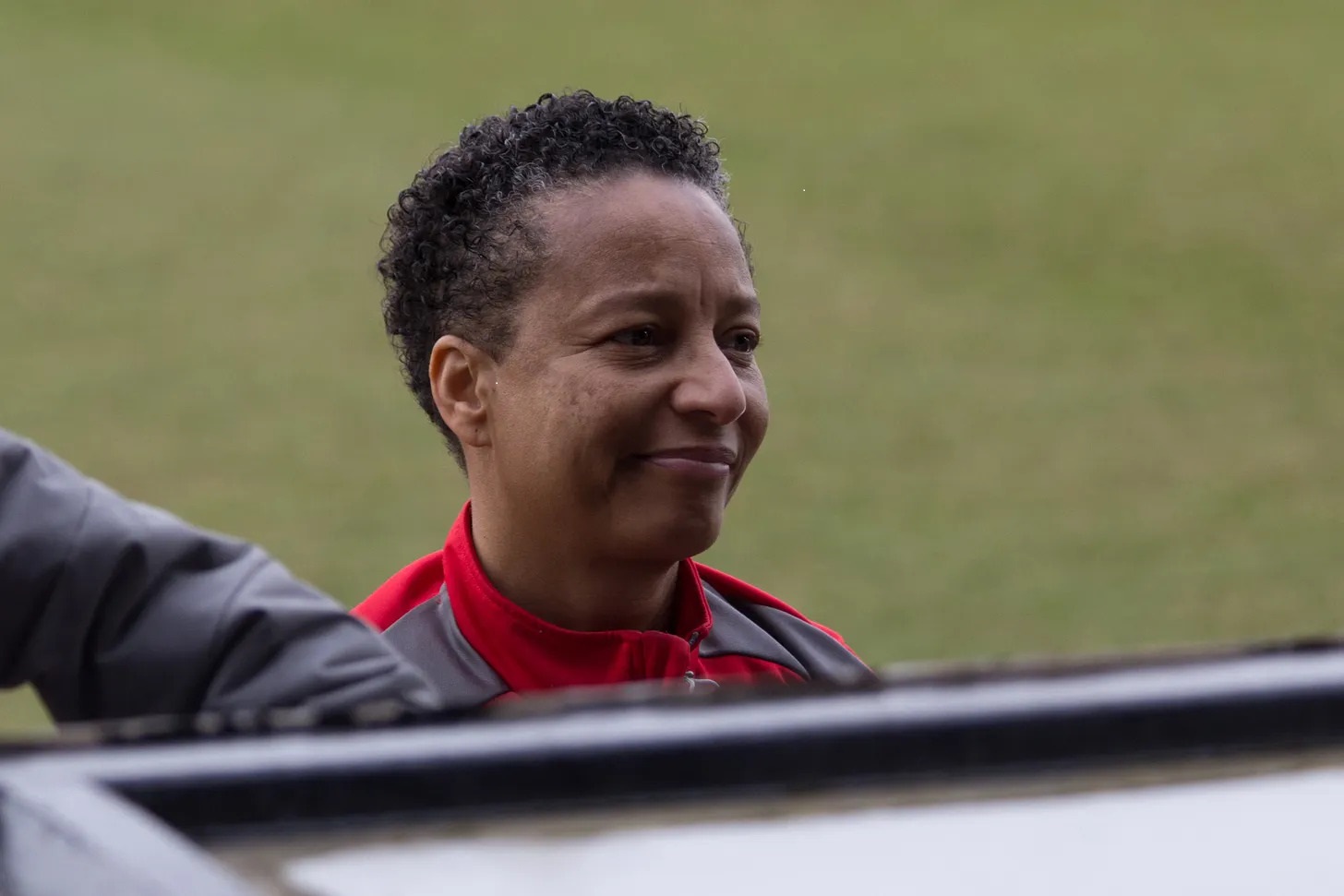
Over the next 15 years, she made changes and fought battles that ultimately led to England’s more recent successes.
Hope Powell literally built the England women’s setup from the ground up.
She brought in physios, a medical officer, a sports scientist, and a goalkeeping coach for the first time.
Together, they created a professional setup and began changing how England’s national team functioned.
Until this point, everything about the setup had been completely amateur.
In 2001, the FA increased the number of Centres of Excellence to 50. The Centres provided a pathway from grassroots football in towns and villages to potentially playing the sport at the top level.
Alongside the Centres of Excellence, Hope Powell began the first scholarship programme. This allowed nineteen players to receive fully funded scholarships to attend the Loughborough Player Development Centre – meaning they could continue their education alongside top football coaching.
Since most clubs were still part-time, the scholarships allowed players such as Ellen White, Jill Scott, and Karen Carney to study beyond GCSEs whilst also training.
Having begun her coaching journey as a 19-year-old, in 2003 Hope Powell became the first woman to earn a UEFA Pro Licence – the highest coaching qualification.
She led England’s Lionesses to the 2001, 2005, 2009, and 2013 Euros, and to the 2007 and 2011 World Cup quarter-finals. They won two Cyprus Cups and reached the 2009 Euros final.
In 2010, she was awarded a CBE for her contribution to women’s football (having already received an MBE and OBE).
Through the 1990s and beyond, Hope Powell was women’s football in England. And we owe her an enormous debt of gratitude.
For an overview of the growth of women’s football across the world from Victorian Britain to the 2023 Fifa World Cup, check out my book She Can Kick It. The history of women’s football across the world via a girl in love with the beautiful game.”
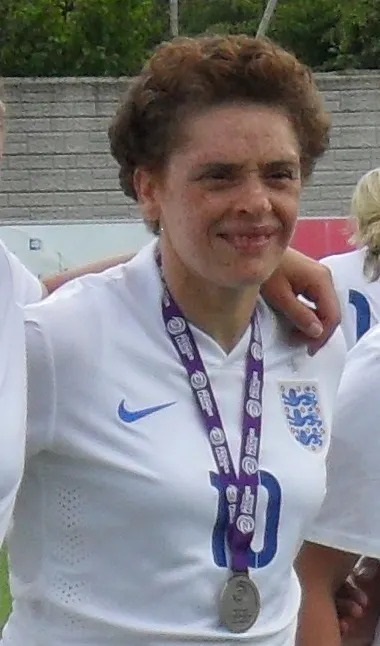
Football Buying Network

I was talking to Lee at the Football Buying Network who said he was looking for constructive ideas for his new Football Buying Network. It would have been rude not to support, so here goes.
Football Buying Network Launches Pilot to Help Non-League Clubs Reduce Costs Through Collective Buying
A new initiative aimed at helping non-league and grassroots football clubs reduce costs
through collective purchasing has launched its initial pilot. Football Buying Network (FBN) has been created to bring clubs together around shared purchasing needs, allowing them to combine demand and potentially access stronger pricing and commercial terms from suppliers than they may be able to secure individually.
The concept is simple: while one club may have limited negotiating power when purchasing
equipment, services or other essential products, a group of clubs requiring the same thing
can represent a much more significant opportunity for suppliers.
FBN plans to organise participating clubs into buying pools based on common requirements
and then approach suitable suppliers on behalf of the group.
The pilot is currently open to non-league and grassroots clubs, with FBN particularly keen to
hear from club owners, chairmen, secretaries, treasurers, commercial teams, volunteers and
anyone involved in purchasing decisions.
There is no membership fee for clubs taking part in the pilot, no subscription, no exclusivity
and no obligation to purchase through any agreement negotiated by the network.
Clubs remain free to continue using their existing suppliers and decide independently
whether any opportunity presented through FBN is right for them.
Founder Lee Holness said:
“Football clubs across non-league and grassroots football are often purchasing many of the
same products and services, but they are doing so independently.
“The idea behind Football Buying Network is to see what happens when we start bringing
that demand together.
“One club may not be able to influence the price of a product very much, but if ten, twenty or
fifty clubs have the same requirement, that potentially becomes a very different conversation
with a supplier.
“We are not trying to control how clubs spend their money or tell them who they should buy
from. The purpose of FBN is to create opportunities.
“If we can negotiate something that genuinely saves a club money or gives them better
terms, they can take advantage of it. If the deal does not work for them, they simply do not
use it.”
The Football Buying Network pilot will also be used to identify where clubs are experiencing
the greatest cost pressures and which areas of club spending are best suited to collective
purchasing.
Potential buying categories could range from football and training equipment through to
ground and pitch products, printing, signage, operational supplies and other services
regularly required by clubs. Holness added:
“One of the most important parts of the pilot is listening to clubs before deciding what thenetwork should become.
“I do not want to build something based on assumptions about what clubs need. We want
people who are actually running football clubs to tell us where the problems are, what they
are spending money on and where a network like this could genuinely help.
“Non-league football relies enormously on volunteers, supporters and people putting huge
amounts of time into keeping their clubs running. If we can build something that helps those
clubs keep more money inside the football club, that is worth pursuing.”
FBN says transparency will be a central part of the model.
Participating clubs will not be required to pay simply to access the network, while supplier
agreements, pricing and commercial arrangements are intended to be presented clearly so
clubs can make their own purchasing decisions.
The long-term aim is to build a network capable of representing demand from clubs across
different levels of non-league and grassroots football, helping suppliers reach groups of
genuine buyers while giving participating clubs greater collective purchasing power.
FBN is also interested in hearing from leagues, competitions, football organisations and
other groups working with multiple clubs where a collective purchasing arrangement could
provide wider benefits.
The pilot is now open.
Clubs interested in taking part, discussing their current purchasing requirements or finding
out more about the project can contact Football Buying Network directly.
Website: footballbuyingnetwork.co.uk
Email: lee(.@)footballbuyingnetwork.co.uk
About Football Buying Network
Football Buying Network is a UK-based initiative created to help non-league and grassroots
football clubs improve their purchasing power by combining shared demand
3 October 2026
Epping- Bell FC
I saw this on a FB group this week and felt incredibly sad. I messaged the writer. He kindly gave me permission to share anonymously.
Read ….and weep.Please don’t forget the story behind the whole Shirt2010 project – UNHCR.
Epping 2026
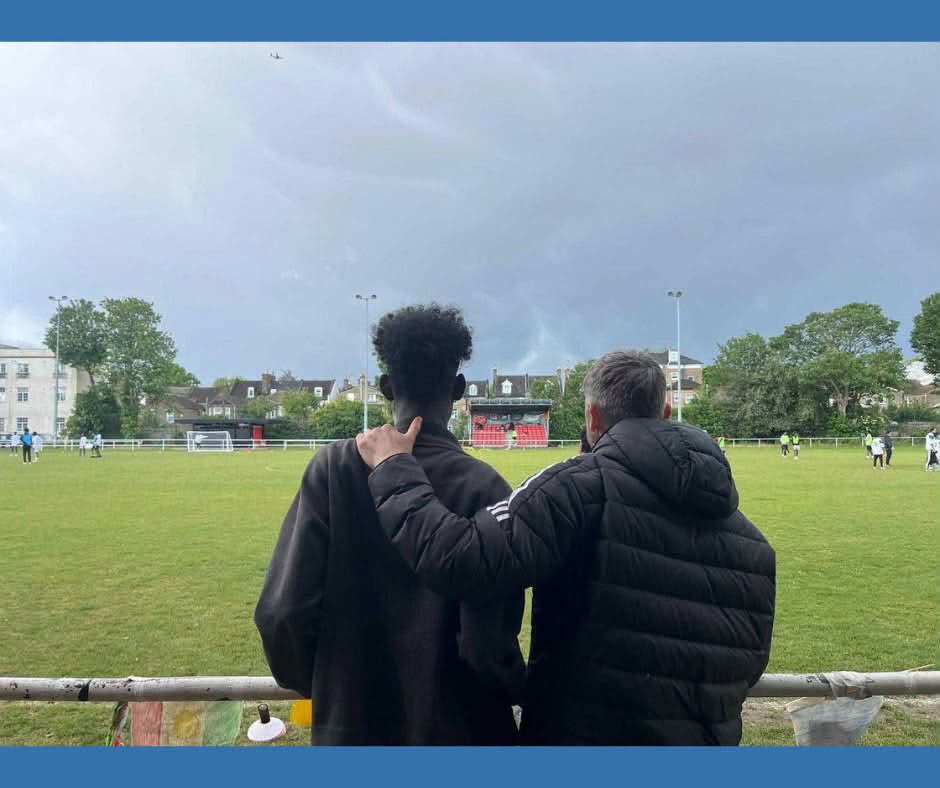
Like most people in Epping, the Bell had no real relevance in my life for most of the time it was used for housing asylum seekers.
Then came the horrible incident with Kabatu*. Thankfully arrested and deported.
Epping went nuts. It was disturbing to see anyone from the hotel become fair game for some. We all saw the social media clips of lads from the hotel having things thrown at them, or being punched and kicked, spat at.
Me and the missus started having walks up the road with the intent to have a chat with anyone we came across from the hotel. Just to let them know there were people in Epping who didn’t feel the same way and were there to help and show compassion.
Initially everyone we came across avoided any sort of interaction, walking along, eyes down, worried for how people would treat them
Only after we reassured that we just wanted to say hello and see how they were would the lads even look at us. Always with relief, and a couple of times with real joy on their faces.
Long story short(ish), I thought I wanted to do something for these guys, just give them a bit of normality in their lives.
For quite a few years, I’ve managed a grass roots football team, and I know the power football has in breaking down barriers and bringing people together. So the easiest thing for me to do would be football sessions.
I asked one of my senior players (H) if he would help me and he was happy to get on board.
On our first day there we were shown to a very small courtyard inside the boundaries of the hotel. I mean tiny. Max 15 x 30 m. And about 35 lads turned up, so it was a squeeze. Not ideal.
What was interesting was how the lads grouped with people from their own country. Even within the hotel they were looking for some sort of safety.
A wide range of abilities, and a wide range of fluency in English meant it took time to get going, but we did.
Over the weeks, the sessions flowed much better. A couple of lads with very good English helped when complicated things needed explaining. And most satisfying, the groups broke down. Everyone was cool with everyone. We were told by hotel security that this had spilled out into general hotel life, and there was more bonding between lads that previously had nothing to do with each other.
The boys were having fun and our sessions had become a focal point for their week.
We also found we had some decent players.
The weeks went on. The lads continued to enjoy. Of course some were being moved on or rejected, so as the numbers in the hotel diminished, so did the numbers coming to training. But it was a pretty consistent 25% of the residents coming to train each week.
Word reached us of a mini 8-a-side tournament being hosted in Forest Gate (big up Clapton FC). The teams were all made up of people with the short straw; asylum seekers, refugees, homeless men, impoverished young adults.
We spoke to the lads and said we wanted to enter the tournament. This news lifted them so much. There was constant talk of it around the hotel. No one was late for training, everyone was taking it serious. A couple of the lads started arranging extra sessions during the week, mimicking the drills H and I gave them.
Some dared to venture out in the evenings just to play football in a field and get used to more space.
Bell FC was forming.
Even those who didn’t play were getting involved. Flags were made of all the nationalities within our squad.
A couple of lads put a bit of a dance together for entertainment !
Some local contacts reached out to friends, charities, even Premier League football clubs to get everyone kitted out.
The day of the tournament came. The boys were buzzing.
Local volunteers shipped all the lads- players and supporters – to Forest Gate, kits were presented, shin pads reluctantly worn and the English weather did its bit with rain, sun and hail storms all coming within the space of about 4 hours.
The teams were split to gauge their levels, a few short games played and then divided into two groups, each playing for a trophy.
The team was full of enthusiasm. They played well but their first time in a competitive match showed and they lost 2-0.
I’ve managed for years. I know the result doesn’t always reflect the performance. But for the lads it was different. This was the tournament, they didn’t have next week to enjoy, or a season ahead to look forward to.
“Today” meant everything to them.
Me and H had a chat with the team, pointed out some small improvements they could make and encouraged them they had played well and would see the benefit.
Lifted they went out again. And lost 1-0.
This was not how it was meant to go. To see the optimism drain was sad to see.
Then one of the residents ( Y ) who had come to support his friends got an email to say his asylum claim had been denied.
To be honest losing a game of football became less important.
We all hid from the hail for a bit, and tried to comfort Y.
The football didn’t need any discussion. The lads were playing well. We knew it would come.
But they didn’t have another chance, lose the next game and it was over for them.
When they went out for kick off, Y grabbed an old snare drum, and, banging it, started chanting “Bell FC” over and over.
I was amazed that at such a difficult time his priority was to support his friends.
The rest was like a film. The boys narrowly won their next game 1-0. But it was the lift they needed.
The next game they blew away the team they had lost their first game to, winning it 3-1.
The football was flowing, simple things were done right, tackles were won cleanly and the combinations were what we had spent weeks doing in our small courtyard.
They could not be beaten.
Bell FC progressed to the final, another 3-1 win but more nervy than it sounds with the final goal coming very late in the game. But they had won it. Champions !!
Having something to focus on, something so positive to look forward to was obviously a huge benefit for the lads.
The self motivation for exercise and the mental health aspect were massive.
When the Bell was emptied earlier this year, it obviously made organising things a bit more difficult, but we have managed to play a full 11-a-side friendly and hope to have some more throughout the season.
One of the lads from Bell FC played for my Sunday team last year, and is now playing and doing very well for a grass roots football team local to where he was moved to, and another has gone on to sign for a step 5 team.
I still speak to them all regularly, and meet up every now and then.
I can honestly say being involved with these lads has enriched my life incredibly.
I am forever grateful.
Coach
Edit* Kabatu
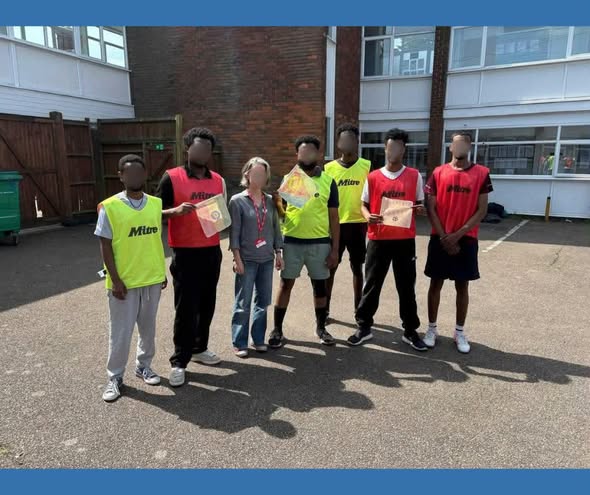
Seven Human Beings – What’s not to love?
ShareProgramme Fair Today
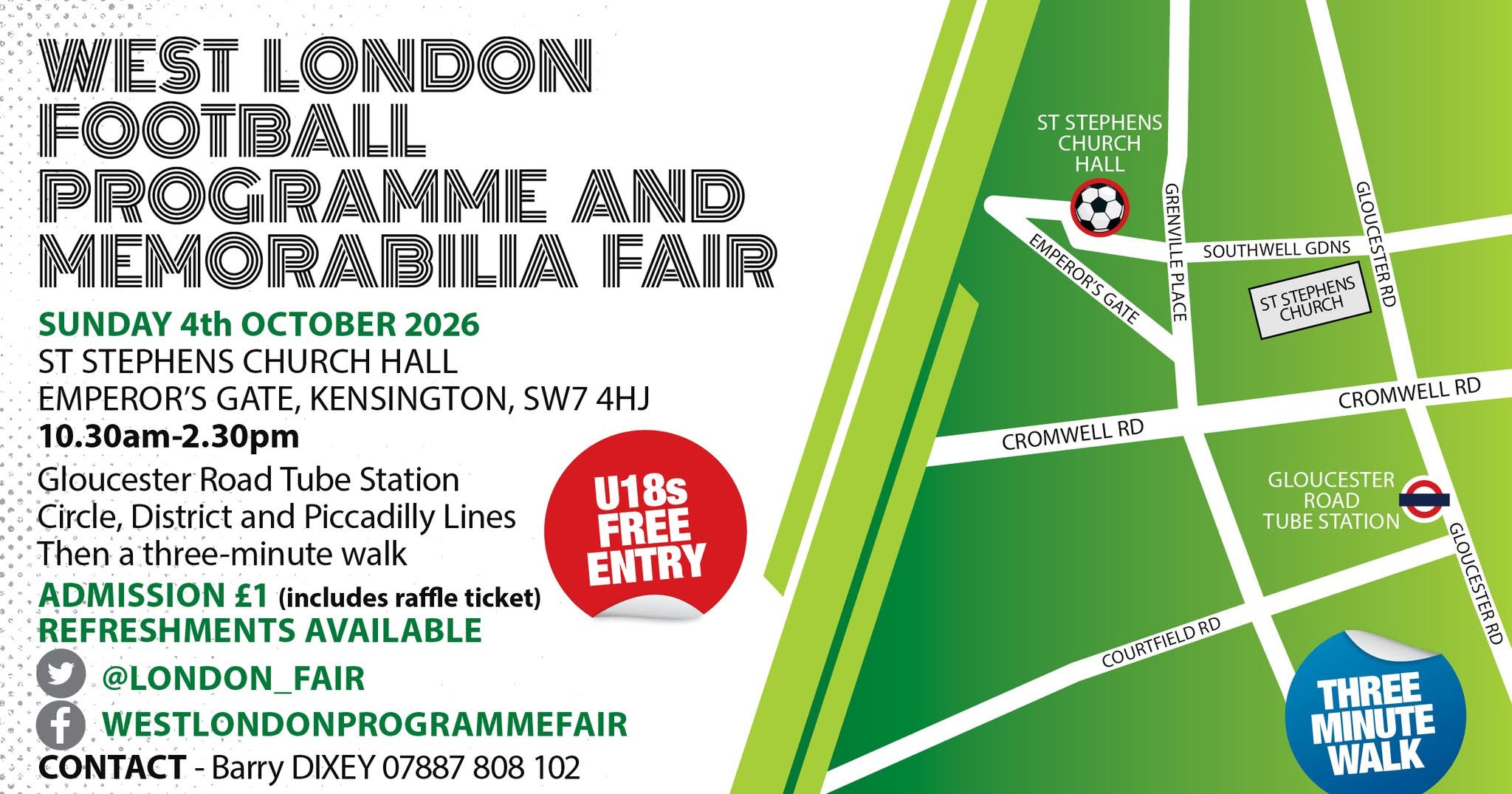
As always lots of great offers from quality, genuine traders.
See you all there. Rich Letts from Sporting Gold, Lee Hermitage and Les Easterbrook.
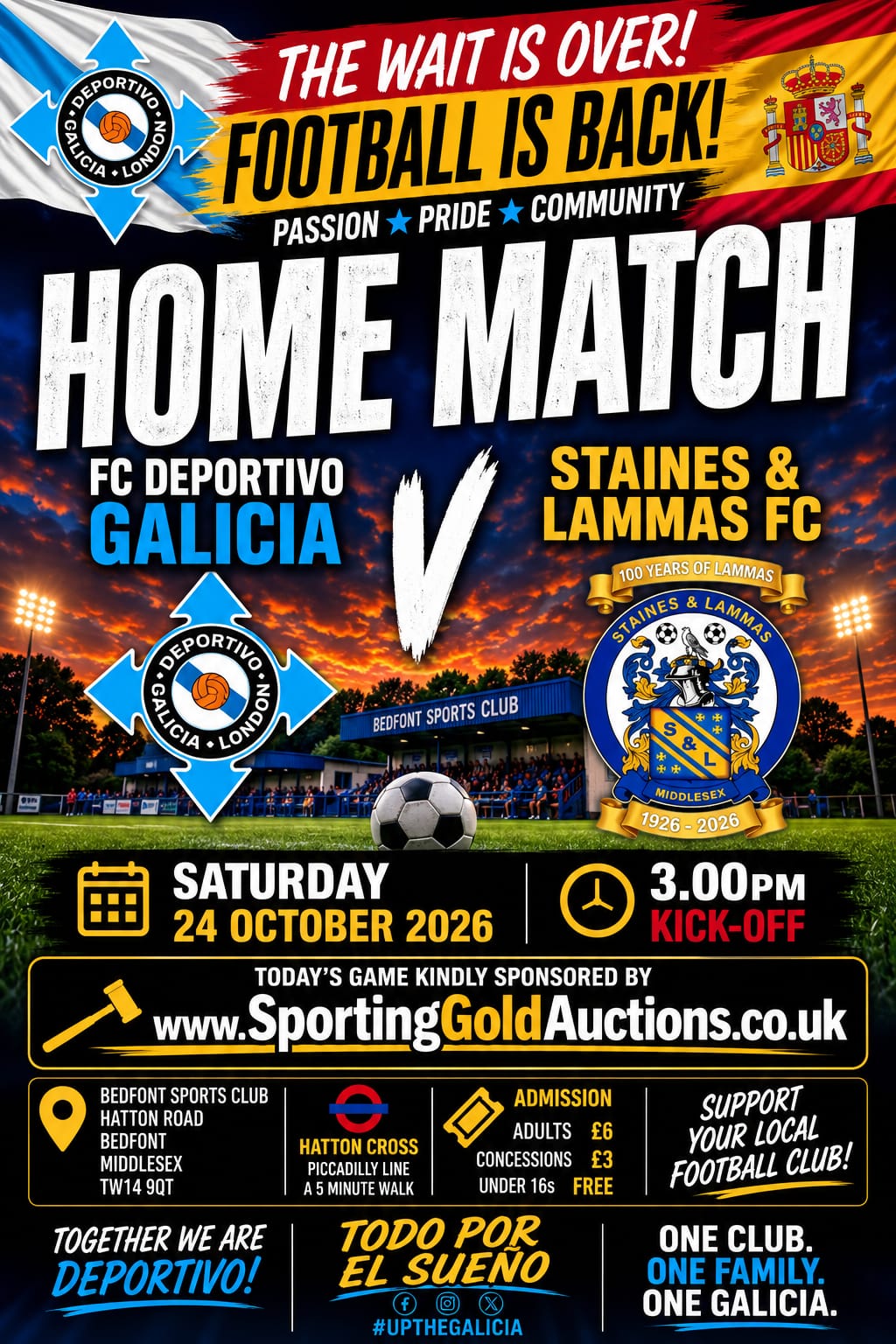
…and as always a big THANK YOU to the organisers Barry and Mark.
FC Bayern Munich
FC Bayern Munich or FC Bayern München as it is is German.
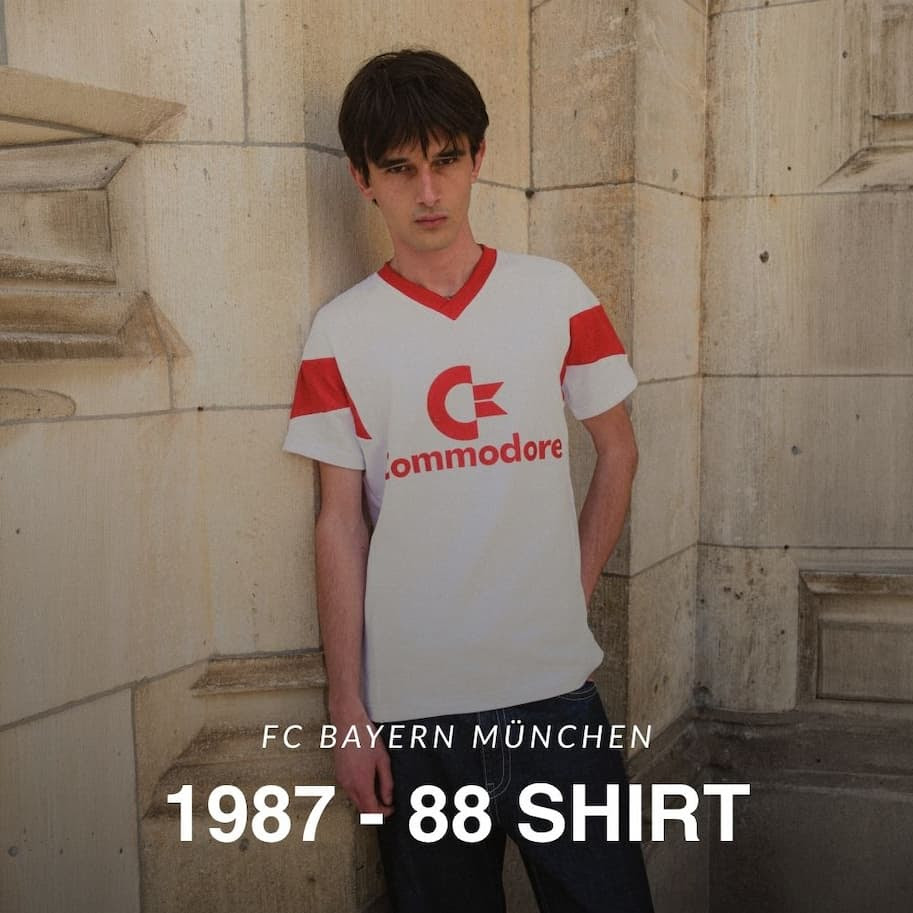
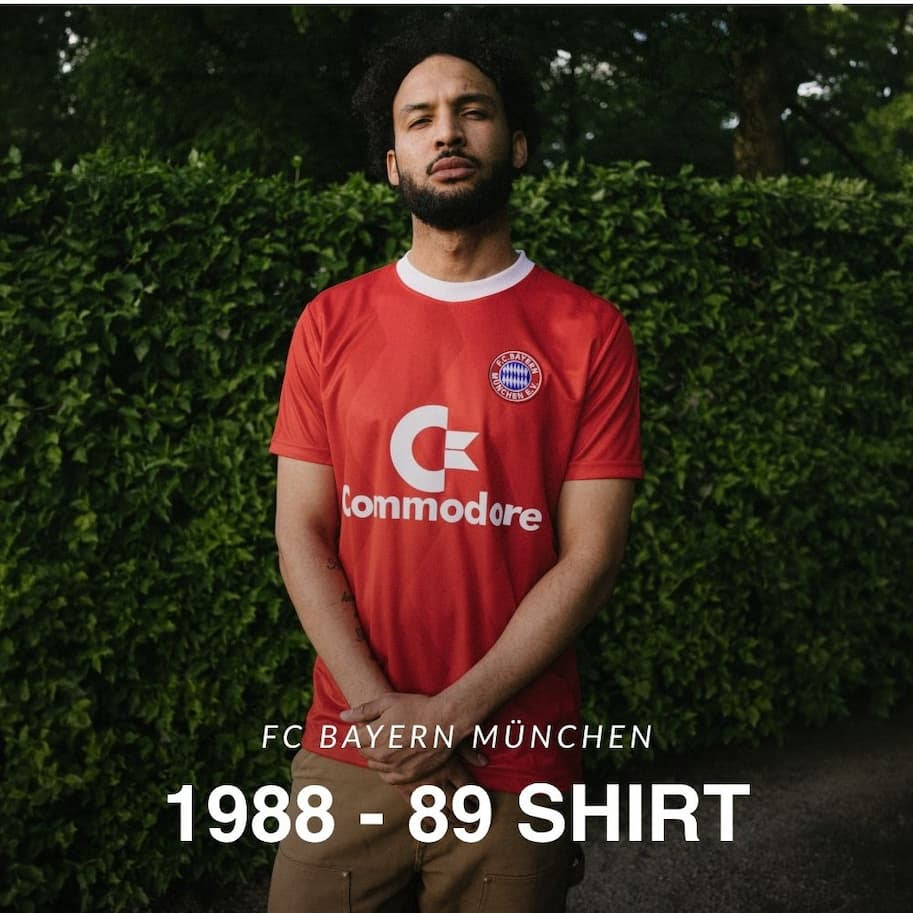
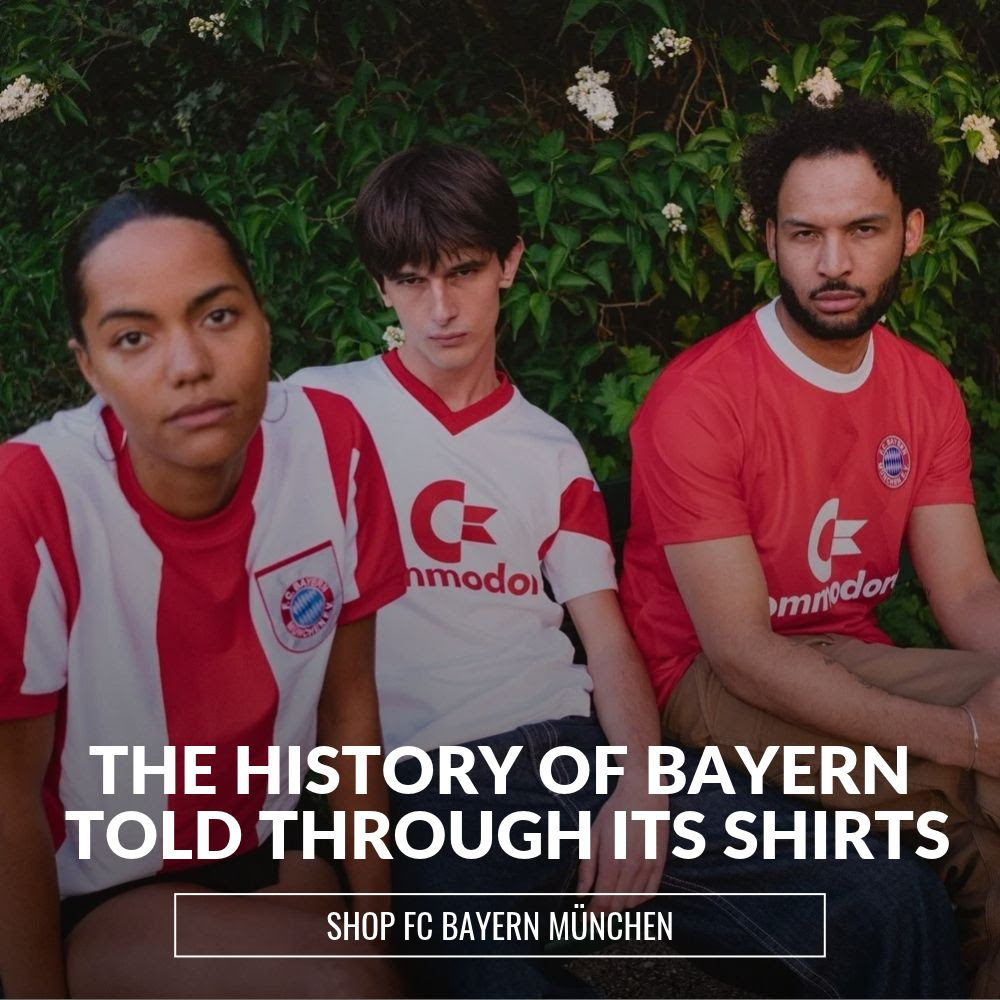
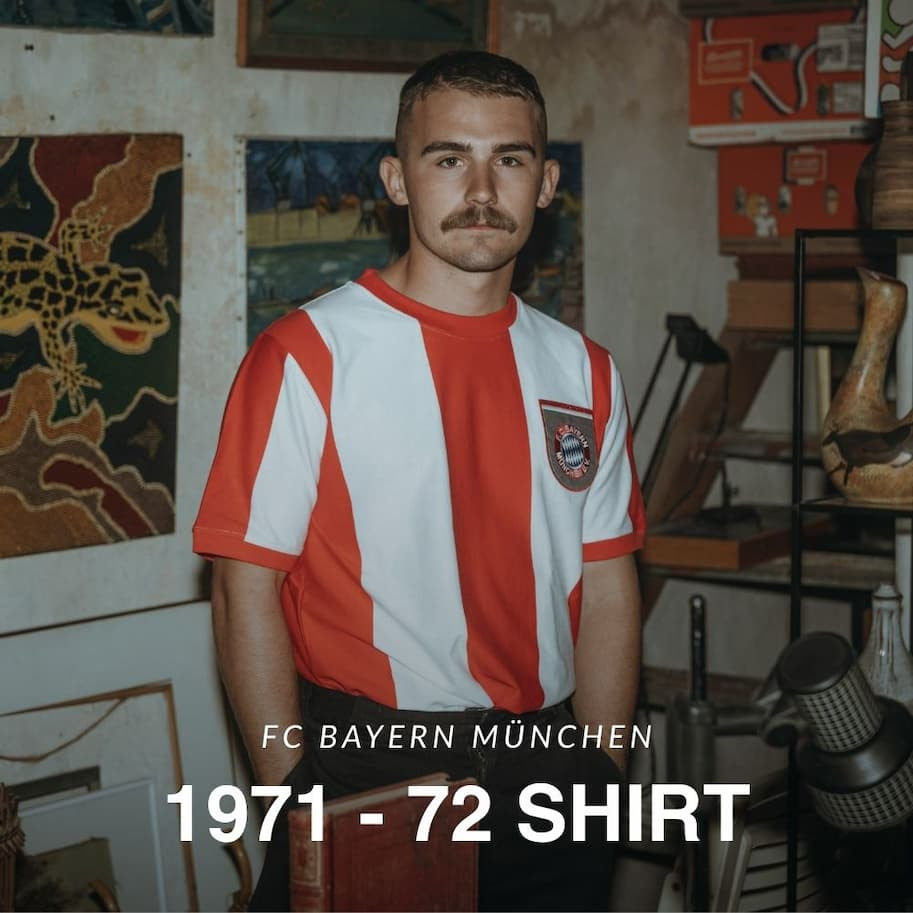
I was delighted to get a newsletter from our friends at COPA today. They have expanded their Bayern Munich range and I thought you would like to see it.
FC BAYERN MÜNCHEN – A LEGACY WRITTEN IN RED
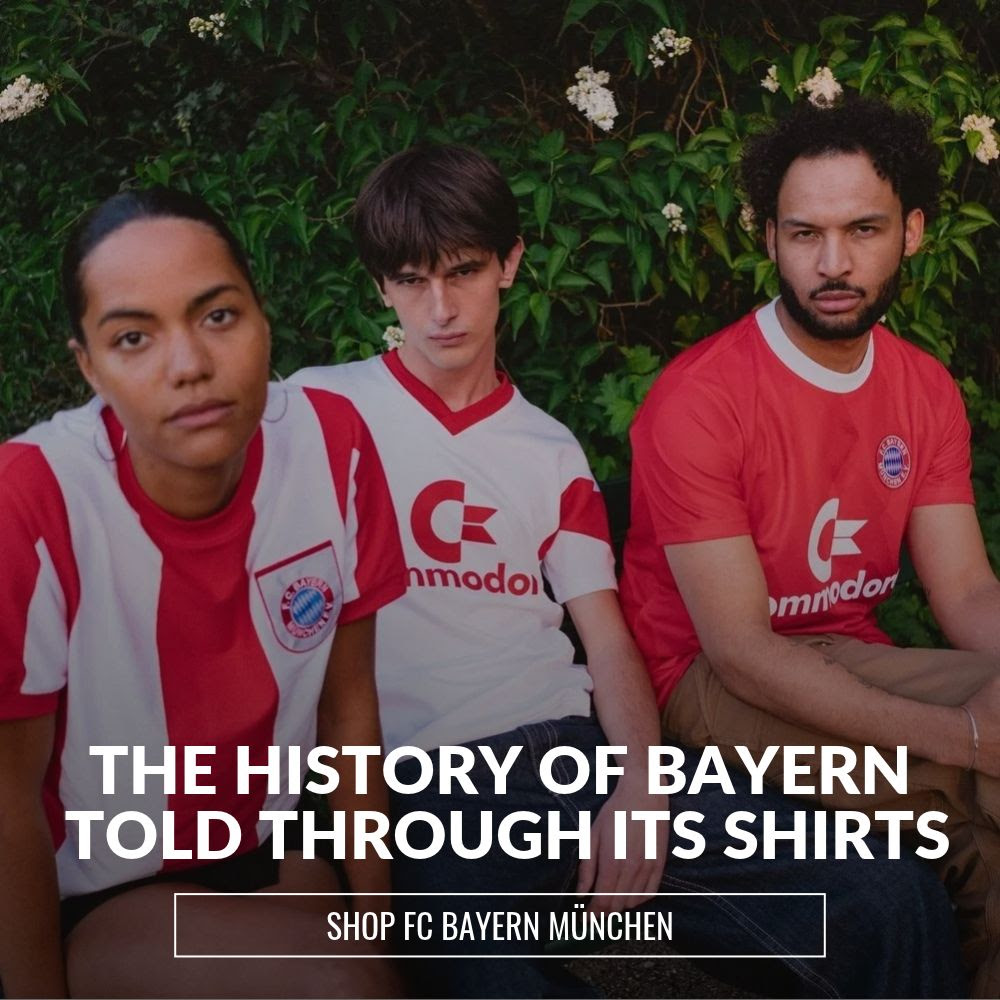
From the early triumphs in Munich to nights that shaped European football, Bayern’s red and white has come to represent ambition, belief and generations of success.
This official retro collection celebrates the shirts, players and moments that helped build that legacy, from the rise of a legendary team in the 1970s to the unforgettable eras that followed.
Different generations. One Bayern.
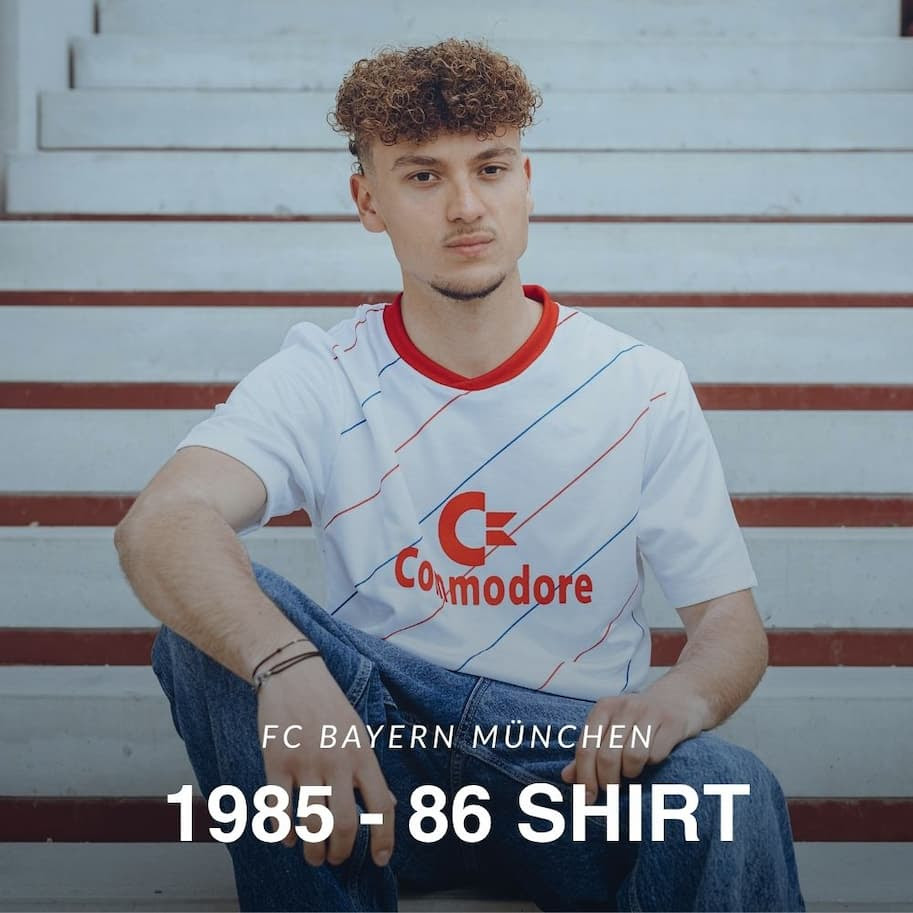
To learn more and order visit the official COPA website
Share